Organic Food Safety: What Brands and Consumers Need to Know in 2025
Key Takeaways
Organic food generally contains lower synthetic pesticide residue levels than conventional alternatives, but both must meet the same legal safety standards in the United States.
The organic label is a regulated farming and processing standard—not a guarantee that food is chemical-free or automatically more nutritious.
Microbial risks like E. coli, Salmonella, and Listeria exist in both organic and conventional systems; proper handling matters more than the label.
U.S. regulators (USDA, FDA, EPA) and EU bodies (EFSA, with OSOA effective January 2026) take different approaches to chemical assessments, affecting what substances are permitted in organic products.
Practical habits—washing produce, proper storage, and cooking to safe temperatures—reduce risk regardless of whether food is organic or conventional.
Asymmetric Marketing helps organic and natural brands communicate these nuances transparently, building long-term consumer trust through evidence-based content.
Introduction: What “Organic Food Safety” Really Means
When consumers search for information about organic food safety, they’re usually asking a simple question: Is organic food safer to eat? The answer requires understanding two distinct categories of risk that apply to all food, whether it carries an organic label or not.
The first category is chemical safety, which covers deliberate inputs like pesticides and food additives, as well as chemicals from food contact materials such as packaging. The second is microbiological safety—the risk of pathogens like bacteria, viruses, and parasites that can cause foodborne illness. Both categories matter, and organic certification addresses them differently than many consumers assume.
Here’s what often gets lost in the conversation: “organic” is a regulated farming and processing standard, not a direct claim about nutrition or superior health outcomes. In the United States, the USDA National Organic Program was created by the Organic Foods Production Act of 1990 and defines what farmers and processors must do to earn the organic label. EU organic regulations function similarly. These standards restrict certain inputs and require inspections, but they don’t exist outside the broader food safety framework that applies to all foods.
From a consumer perspective, “safer” often means fewer synthetic chemicals and reduced long-term health risks. From a regulatory standpoint, “safe” means residues and contaminants remain below health-based thresholds established through formal risk assessments. Both views have merit, and brands that understand this distinction can communicate more effectively.
At Asymmetric Marketing, we work with organic, natural, and better-for-you brands on clear, evidence-based communication about food safety. This article will compare organic vs conventional safety profiles, examine how U.S. and EU chemical rules differ, review what the science says about nutrients and microbes, and provide practical guidance for both consumers and the brands serving them.
What Counts as Organic Food (and What It Is Not)
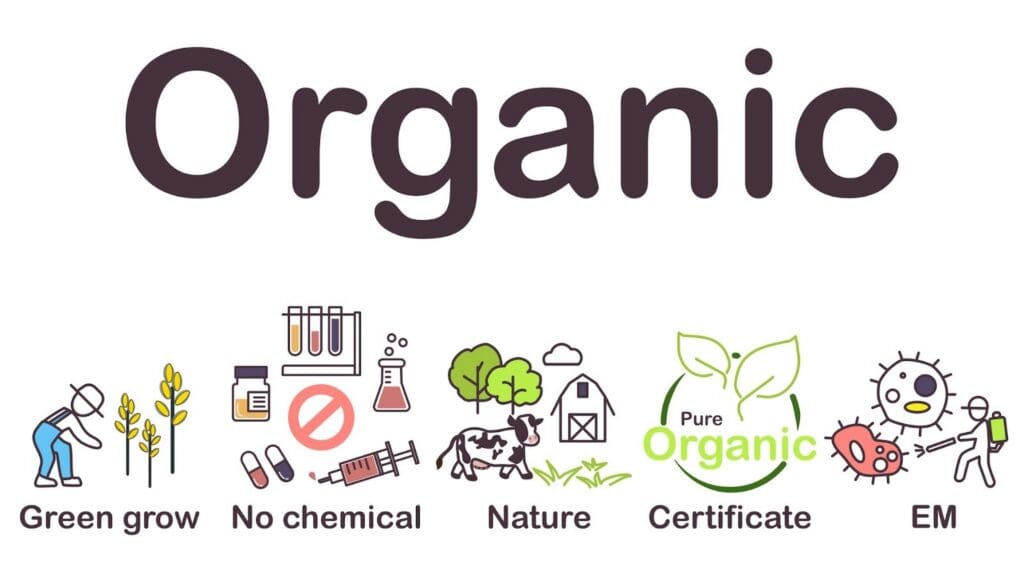
Organic food refers to products that meet national standards for farming and processing, verified through third-party certification and regular inspections, and organic standards and certification help define how those quality and safety expectations are met. In the United States, the USDA Organic seal indicates compliance with the National Organic Program. In Europe, the EU organic logo serves the same purpose.
Key organic farming rules include:
No synthetic fertilizers applied to fields; organic production relies on compost, cover crops, and approved natural inputs
Strict limits on synthetic pesticides—organic farmers may use only substances on the National List of allowed chemicals
Prohibition of routine antibiotics and growth hormones in livestock
Requirement for organic feed and outdoor access for animals
No use of genetic engineering (GMOs) in seeds, feed, or processing
Organic processing standards prohibit:
Many artificial colors and synthetic preservatives
Irradiation as a preservation method
Genetically modified ingredients in certified organic products
Common misconceptions to clarify:
Organic does not automatically mean local—certified organic products can come from anywhere in the world
Organic is not guaranteed to be more nutritious; nutrient content depends on soil, crop variety, and harvest timing
Organic is not free from all chemicals—natural substances and environmental contaminants (like heavy metals from soil) can still be present
Organic crops may contain trace pesticide residue from environmental drift or soil history
Understanding these distinctions helps brands communicate honestly about what the organic label does and does not promise.
Chemical Safety: Pesticides, Additives, and Packaging
Chemical safety in food involves both deliberate uses—like pesticides applied to control pests, food additives used to extend shelf life, and chemicals in packaging—and unintentional contaminants like industrial pollutants, heavy metals, and natural plant toxins. Organic standards primarily address the deliberate inputs, but the broader chemical landscape affects all food production, which is why comparisons of organic vs. conventional farming practices often focus on differences in synthetic chemical use and environmental impact.
Pesticide use in organic vs conventional systems:
Organic farmers may use approved natural pesticides (like neem oil, pyrethrin, or copper compounds) and a limited number of restricted synthetics listed on the National List
Conventional farming allows a much broader range of approximately 900+ synthetic pesticide active ingredients
Both systems operate under EPA-set maximum residue limits, and both undergo testing to verify compliance
EFSA data from 2013-2015 found that 44% of conventional samples had detectable residues compared to just 6.5% of organic samples; MRL exceedance was 1.2% in conventional vs 0.2% in organic
U.S. vs EU regulatory approaches differ significantly:
Titanium dioxide (E-171) was banned as a food additive in the EU effective February 2022 after EFSA concluded it could no longer be considered safe due to potential genotoxicity; it remains permitted in some U.S. foods
Potassium bromate, used in baking in the United States, is banned in many EU countries due to carcinogenic concerns
The EU generally applies the precautionary principle, requiring substances to undergo review before being allowed; new evidence of risk often triggers bans or restrictions
In the U.S., the FDA and industry may designate chemical substances as GRAS (“Generally Recognized as Safe”), allowing ingredients to bypass full pre-market regulatory review if enough evidence supports safety from scientific literature or expert consensus
The GRAS process raises transparency concerns:
Companies can self-determine GRAS status without notifying the FDA
Critics argue that this results in slower re-evaluation and less public input compared to EU systems
Some substances once considered GRAS are now under renewed scrutiny, including certain preservatives and food additives
Food contact materials and packaging chemicals:
Chemicals can migrate from packaging into food—plasticizers, packaging inks, BPA-like substances, and coatings all undergo assessment by EFSA, FDA, and other agencies
Organic certification does not automatically ensure safer packaging; organic products must still comply with the same migration limits that apply to all foods.
Brands marketing organic products should verify their packaging meets current safety standards and consider this an area for transparent communication.
Is Organic Food Safer or Healthier Than Conventional?
Major public health organizations consistently emphasize that the most important dietary priority is eating enough fruits, vegetables, and whole grains—whether organic or conventional. The health effects of increasing produce consumption generally outweigh differences between farming systems, even though organic vs conventional farming methods can diverge significantly in their environmental and chemical footprints.
What the evidence shows about pesticide exposure:
Switching to an all-organic diet leads to measurable reductions in synthetic pesticide biomarkers within days; one Environmental Research study found significant drops after just six days on an organic diet
EFSA monitoring consistently shows dramatically lower rates of quantifiable residues in organic samples
Lower exposure may be especially relevant for vulnerable populations—pregnant people and young children—though long-term health outcomes directly attributable to reduced pesticide exposure remain unproven in clinical trials
Research on health outcomes:
Large observational cohort studies have found associations between high organic food consumption and lower rates of certain cancers, including non-Hodgkin lymphoma
However, observational data cannot prove cause-and-effect; people who eat organic may also have other health-promoting behaviors
Available data suggest possible benefits, but do not establish definitive causality
What the evidence shows about nutrients:
Meta-analyses examining differences in vitamins, minerals, and antioxidants between organic crops and conventional alternatives show limited, mixed evidence
A systematic review compiled by the USDA National Agricultural Library found no consistent differences in vitamin C, calcium, iron, or carotene across organic and conventional crops
Factors like soil quality, crop variety, harvest timing, and storage conditions often matter more than farming method alone
Important perspective for consumers:
“Organic” on a product label does not mean “healthy overall.”
Organic cane sugar is still sugar; organic ultra-processed snacks can still be high in calories, sodium, or added sugars
Brands should avoid implying that organic certification transforms any product into a health food
Asymmetric Marketing helps brands present this nuance honestly in content marketing and SEO assets. Using scientific studies and available data to explain what organic standards do and don’t guarantee builds long-term trust rather than relying on simplistic “organic = always safer” claims.
Microbiological Risks: Organic vs Conventional
Pathogens like E. coli O157:H7, Salmonella, Listeria monocytogenes, and Campylobacter do not distinguish between organic and conventional food supply chains. Both systems can and do experience outbreaks when handling or processing fails, even on farms that prioritize soil health, biodiversity, and long-term sustainability through regenerative organic practices.
Organic agriculture and manure use:
Organic practices often rely on manure and composted materials as fertilizers
When properly treated (adequate time, temperature, and maturity) and applied according to strict timing rules relative to harvest, composted manure is safe
Risk increases if composting protocols are violated or if waiting periods between application and harvest are not followed
Conventional systems share similar risks:
Conventional farming also uses manure in many cases
Contamination via irrigation water, wildlife, or unsanitary handling affects both systems
Neither organic nor conventional status makes a food supply inherently immune to microbial hazards
Real-world outbreak examples:
A 2023-2024 Salmonella outbreak linked to raw milk products from a single California dairy farm sickened over 160 people—one of the largest raw milk-related outbreaks in recent U.S. history
Leafy greens and sprouts have caused outbreaks in both organic and conventional supply chains
A seasonal microbiome study of raw milk from organic vs conventional dairies in Oregon found similar microbial communities; environmental and seasonal factors were stronger predictors than farming method.
Key takeaway for microbial safety:
The organic label itself does not reduce microbial risk. What matters is whether farms and processors follow proper composting protocols, pathogen testing, clean water use, hygienic harvesting, cold chain maintenance, and sanitary handling practices. This sets up the critical importance of consumer-level food safety habits.
Practical Food Safety Habits for Organic Consumers
Every day, kitchen behaviors significantly reduce both microbial and chemical exposure for organic and conventional foods alike. These practices often matter more for immediate safety than whether food carries an organic label, while choices like buying local and organic food to reduce your carbon footprint can address broader environmental impacts of how that food was produced and transported.
Washing produce effectively:
Rinse fruits and vegetables under cold running water before eating, cutting, or cooking
Use a clean vegetable brush on firm produce like melons, cucumbers, and potatoes
Discard the outer leaves of leafy greens, which may harbor soil or bacteria
Do not wash produce with soap, bleach, or household cleaners—residues from these pose their own potential risks
Preventing cross-contamination:
Use separate cutting boards for raw meat/poultry and fresh produce
Refrigerate perishable foods within two hours of purchase (one hour in hot weather)
Cook meats, eggs, and seafood to safe internal temperatures verified with a food thermometer
“Use-by” generally indicates safety (don’t consume after); “best-before” indicates quality (may be safe but less optimal after)
Store organic products according to label instructions to maintain both safety and quality
Temperature guidelines for cooking:
Food
Safe Minimum Internal Temperature
Ground beef, pork, lamb
160°F (71°C)
Poultry (chicken, turkey)
165°F (74°C)
Whole cuts of beef, pork, and lamb
145°F (63°C) + 3-minute rest
Eggs
Cook until the yolk and white are firm
Fish and seafood
145°F (63°C)
These habits protect public health regardless of whether the food was produced through organic farming or conventional farming methods.
Regulatory Oversight: USDA, FDA, EFSA, and OSOA
The shared goal of U.S. and EU regulators is to keep chemical and microbial risks in the food supply below health-based thresholds while supporting functioning food systems. Understanding how these agencies work helps brands communicate their compliance and safety practices more effectively.
U.S. regulatory roles:
USDA (through AMS/NOP) sets and enforces organic standards and certification requirements; the National Organic Standards Board advises on which prohibited substances can be added to or removed from the National List
FDA oversees most food additives, contaminants, and labeling under the Federal Food, Drug, and Cosmetic Act; it also regulates microbiological hazards across most foods
EPA controls pesticide registration, approves pesticide active ingredients, sets maximum residue limits (tolerances), and assesses inert ingredients in formulations
EU regulatory framework:
EFSA (European Food Safety Authority) conducts independent scientific risk assessments on chemicals in food and feed, providing recommendations to risk managers
The European Commission and member states make regulatory decisions based on EFSA assessments
OSOA: A major regulatory shift:
As of January 1, 2026, the EU implemented “One Substance, One Assessment” (OSOA), part of the Chemicals Strategy for Sustainability
OSOA aims to harmonize chemical safety assessments across food, biocides, pesticides, packaging, and other sectors
The new EU Common Data Platform on Chemicals (EU-CDPC) will collect and share data across agencies for greater transparency and faster regulatory action
Full integration across legislative domains is targeted within a decade
U.S. regulatory evolution:
The FDA is gradually updating its post-market chemical assessment program
Some substances previously considered GRAS are under renewed scrutiny based on new data and public input
Regulatory action may result in revised approvals or restrictions for certain food ingredients
What this means for organic brands:
Organic products still operate within this broader regulatory web. USDA Organic certification sits alongside—not above—core food safety rules applied to all foods sold in the United States. Brands should understand that compliance with organic standards and compliance with general food safety requirements are both necessary.
Cost, Consumer Perception, and Marketing Organic Food Safely
Organic products often cost more than conventional alternatives. This price premium reflects real differences in organic production: lower yields, higher labor inputs, certification and testing costs, and supply-chain segregation requirements to maintain organic integrity, especially for farms that commit to beyond organic, regenerative, and biodynamic practices.
What drives consumer demand for organic:
As more shoppers seek information about organics, regenerative agriculture, and eco-friendly eating, educational resources like an organic and sustainable farming blog can shape how they understand these issues.
Concerns about long-term health effects from chronic low-dose pesticide exposure
Distrust of regulatory loopholes like self-determined GRAS status
Desire to avoid specific pesticides, food additives, or prohibited substances
Environmental and animal welfare considerations beyond immediate health
The perception gap:
Many shoppers overestimate the safety gap between organic and conventional foods
Some believe organic means “completely chemical-free” or “always more nutritious.”
Effective brand communication should balance reassurance about lower pesticide use with transparency about remaining risks and regulatory safeguards.
Avoid fearmongering about conventional food while also avoiding overstated claims about organic superiority.
Marketing approaches that build trust:
Focus on traceability: Where does your product come from? What farms supply your ingredients?
Highlight third-party certifications and what they actually verify
Publish testing protocols: Share how often you test for pesticide residue, heavy metals, and microbial contaminants
Create educational content that explains complex topics (like food contact materials and packaging chemicals) in plain language
Use detailed records and audit summaries as marketing assets
Questions and Answers about Organic Food Safety
Organic Food Safety: Does “organic” mean food is completely chemical-free?
No. All foods are made of chemicals—water, carbohydrates, proteins, fats, and minerals are all chemical substances. Organic standards limit synthetic inputs but still allow natural substances and cannot eliminate all environmental contaminants. Organic products can contain trace residues from pesticide drift, soil history, or packaging migration, but these must remain below strict regulatory thresholds. The realistic goal is lower and better-controlled exposure, not zero chemicals.
Are organic foods less likely to contain controversial additives?
Yes, generally. Certified organic standards prohibit many synthetic colors, artificial sweeteners, and preservation agents common in ultra-processed conventional foods. However, some processing aids and allowed additives still appear in organic packaged products. Consumers should still check ingredient labels carefully. Brands can build trust by publishing clear additive policies and testing practices that help consumers understand exactly what substances are and are not used.
Is imported organic food as safe as domestic organic food?
Imported organic foods must meet the organic rules of the destination market—for example, products sold as USDA Organic in the United States must comply with NOP standards regardless of origin. However, enforcement capacity, testing frequency, and on-the-ground practices can vary between countries. Established certification bodies and recognized accreditation systems help ensure consistent oversight. Brands working with Asymmetric Marketing can turn their sourcing transparency and audit procedures into compelling storytelling that reassures buyers about imported organic ingredients.
Can small farms sell safe organic food without formal certification?
In the United States, some very small operations selling under a revenue threshold may follow organic practices without USDA certification, but they cannot legally use the official form of the organic seal. However, general food safety rules—for water quality, handling, and detailed records—still apply even if the farm is exempt from formal organic certification paperwork. Marketers working with small farms should emphasize specific practices (composting protocols, testing, hygiene training) rather than relying solely on informal “organic-style” claims that lack verification.
How can brands prove their organic products are genuinely safer?
Brands can publish third-party lab testing results for pesticide residue, heavy metals, and microbial contaminants. Making certification audit summaries and quality standards accessible online—through dedicated landing pages, whitepapers, or data-driven blog posts—demonstrates commitment to transparency. Citations to regulators like USDA, FDA, EFSA, or WHO add credibility. Asymmetric Marketing helps turn this technical documentation into user-friendly content that supports both B2B sales and direct-to-consumer trust-building.
Organic food safety is ultimately about informed communication, not fear-based marketing. The data show that organic products generally offer lower synthetic pesticide exposure, but no food system eliminates all risks. What separates trusted brands from the competition is their willingness to explain what organic standards actually deliver—and what they don’t—while connecting that message to concrete choices, such as stocking organic, non-GMO pantry staples sourced from regenerative farms.
If you’re ready to develop content strategies that build genuine consumer trust around food safety, Asymmetric Marketing can help. Our team specializes in turning complex regulatory and scientific information into clear, compelling marketing assets that differentiate organic and natural brands. Contact us today to discuss how evidence-based content can become your competitive advantage.