Every spring at Doudlah Farms, something remarkable happens alongside the planting. A strip of land that could easily have been left as bare dirt or mowed grass begins to bloom — clover, native wildflowers, phacelia, and sunflowers. It hums.
That hum is not an accident. It is a choice. And it starts with understanding why bees matter — not in an abstract, ‘save the planet’ way, but in the immediate, crop-by-crop, harvest-by-harvest way that farmers live and breathe every season.
If you have ever wondered why bees are so important — to your food, to farms like ours, to the food system as a whole — here is the real answer.
Key Takeaways
- Bees are responsible for pollinating roughly one-third of the food humans eat.
- Bee population decline is a documented, serious threat to global food security.
- Organic farms can actively support pollinators through practices like planting pollinator strips.
- At Doudlah Farms, a 35-foot buffer zone beside neighboring chemical fields is planted as a pollinator habitat — turning a rule into a resource.
- What is good for bees is good for soil, crops, and the people who eat them.
Why Are Bees Important? The Short Answer.
Bees are pollinators — meaning they transfer pollen from flower to flower as they forage for nectar. That transfer fertilizes plants and allows them to produce seeds, fruits, and vegetables. Without it, most crops simply do not reproduce.
The numbers are striking. According to the USDA, bees and other pollinators contribute to roughly one-third of the food supply in the United States. That includes almonds, blueberries, cucumbers, squash, apples, and hundreds of other foods that stock grocery shelves.
But bees do not just help individual crops. They support biodiversity. By pollinating wild plants, they contribute to the ecosystems that clean our water, hold our soil together, and feed other wildlife. Bees matter for food — and for everything that grows food.
Why Bees Matter for Crops Specifically
Not all crops need pollinators. Corn and wheat are wind-pollinated. But many of the most nutritious foods — beans, sunflowers, fruits, and most vegetables — depend on insect pollination. At a farm like Doudlah Farms, where we grow dry beans, sunflower seeds, and other crops, healthy pollinator populations are not a nice-to-have. They are essential to yield and quality.
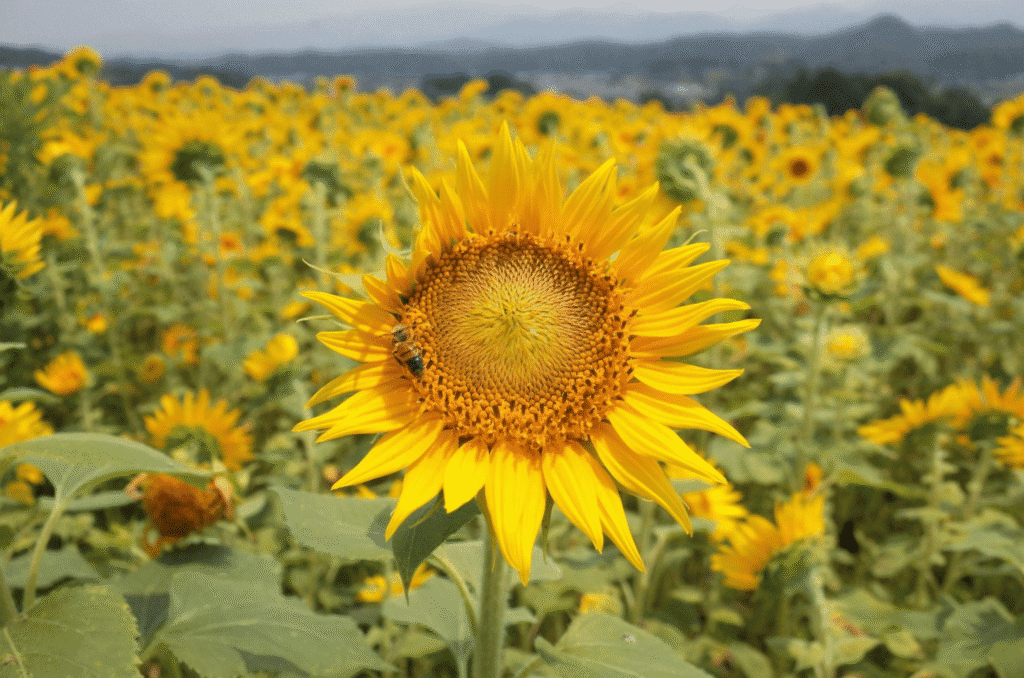
Crops that receive adequate pollination produce more fruit, better seed set, and higher quality harvests. Under-pollinated plants often yield smaller, misshapen, or fewer fruits — even when soil health, irrigation, and fertility are perfect. Pollination is the last mile.
Bee Population Decline: What Is Happening?
For decades, researchers and farmers have sounded the alarm about declining bee populations — both wild native bees and managed honeybee colonies. The causes are interconnected:
- Pesticide exposure, particularly from systemic insecticides that persist in soil and plant tissue
- Habitat loss as grasslands, wildflower meadows, and hedgerows are replaced by monoculture fields
- Parasites and disease, especially the Varroa mite in honeybee colonies
- Climate disruption, which shifts bloom timing out of sync with bee foraging cycles
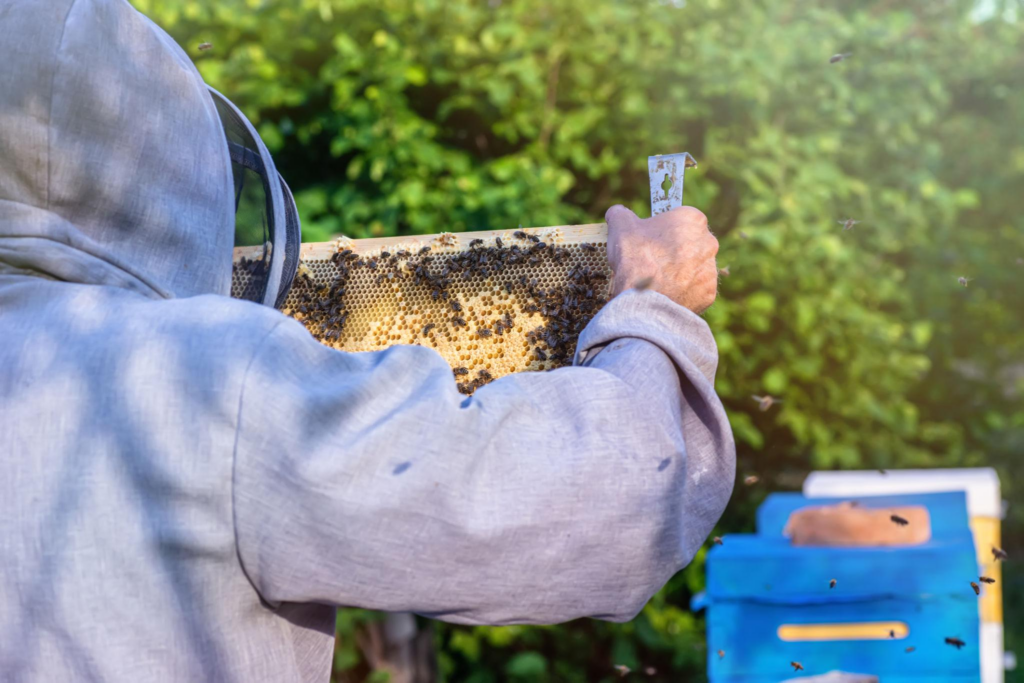
The agricultural landscape amplifies the problem. Large-scale conventional farming often involves treated seeds, herbicide use that eliminates flowering weeds, and vast fields of a single crop, offering bees little nutrition and significant chemical exposure.
Organic farming removes some of those pressures. But it is not enough on its own.
Why Organic Farm Bees Are Different — And Why It Still Takes More
At Doudlah Farms, we do not use synthetic pesticides, herbicides, or fertilizers. We are USDA Organic, MOSA certified, Biodynamic, and Real Organic Project certified — which means our fields are tested clean from over 220 chemicals, including the systemic pesticides most harmful to pollinators.
That matters. An organic farm is a meaningfully safer environment for bees than a conventional field sprayed multiple times per season. But certification alone does not create habitat. Bees need food — diverse, continuous, reliable flowering plants throughout the season. A field of a single crop, even an organic one, does not provide that.
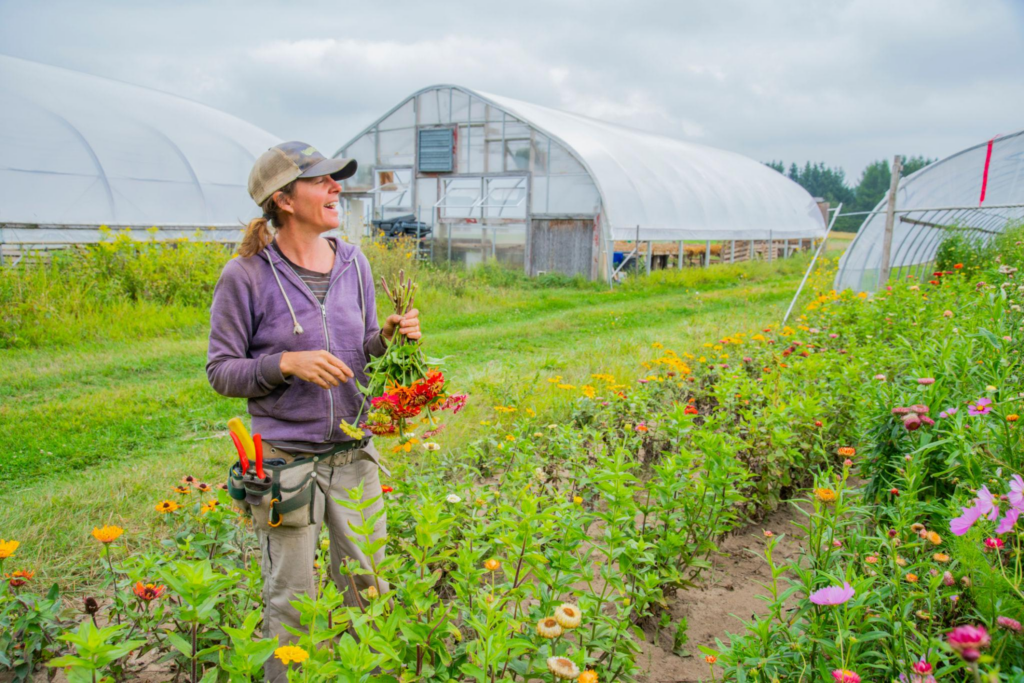
That is where the pollinator strip comes in.
Explore our Beyond Organic certifications →
Pollinator Strips: Turning a Buffer Into a Bloom
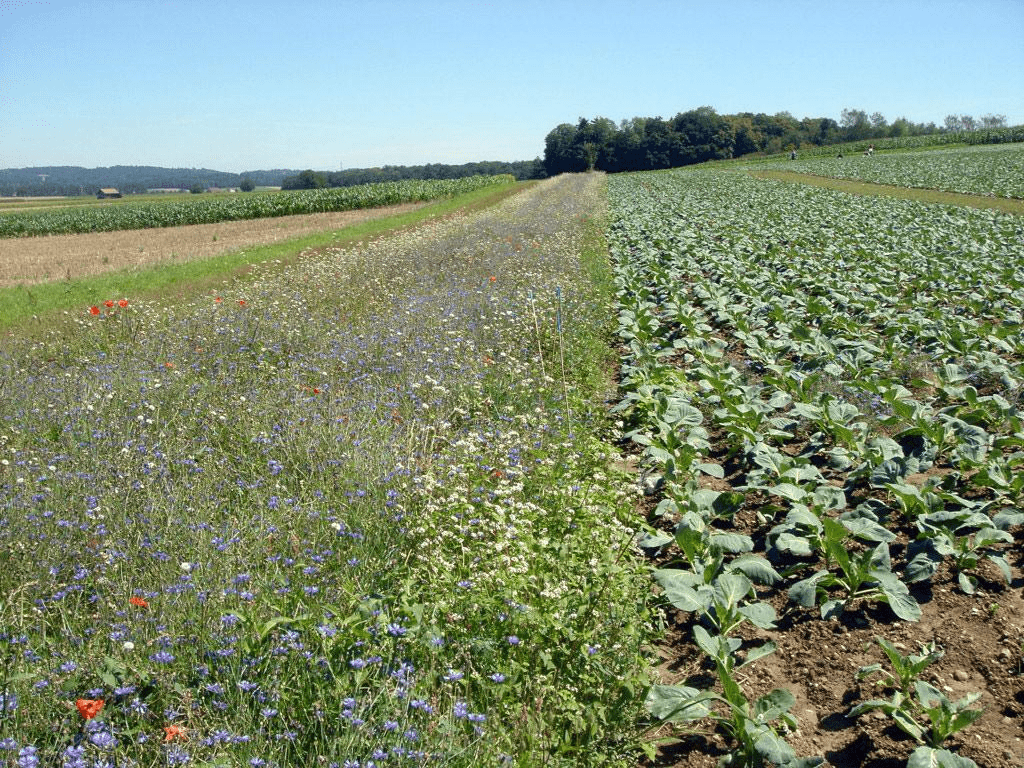
Doudlah Farms sits alongside neighboring properties that use conventional farming practices. Because of this, we maintain a 35-foot buffer from the fence line — a required zone to prevent cross-contamination between their chemical applications and our certified organic ground.
We could have left that strip empty. Many farms do.
Instead, we plant it.
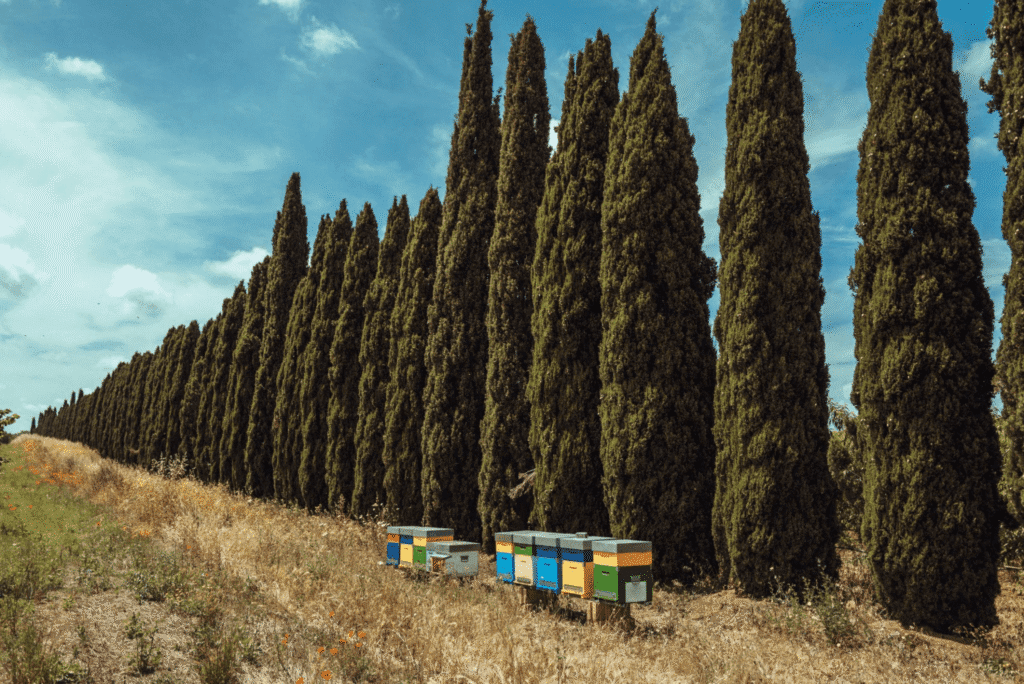
That 35-foot corridor has been turned into a dedicated pollinator strip — a diverse planting of flowering plants chosen specifically to attract and nourish native bees, honeybees, butterflies, and other beneficial insects throughout the growing season. What could have been a compliance zone became a conservation zone.
What Goes Into a Pollinator Strip?
An effective pollinator strip is not just wildflowers scattered along a fence. It is a planned, diverse mix of species that bloom at different times to provide continuous forage. At Doudlah Farms, our strip includes:
- Clover and legumes — nitrogen-fixers that also attract honeybees and bumblebees from early season
- Phacelia — a particularly attractive species for native bees that blooms in mid-season
- Native wildflowers — species that evolved alongside local pollinators and provide nutrition tailored to their needs
- Sunflowers — a late-season source of pollen and nectar that sustains colonies into fall
The strip is also left largely undisturbed during key periods, allowing ground-nesting bees — which make up a significant portion of native bee species — to complete their life cycles undisturbed.
The Benefits Flow in All Directions
A thriving pollinator strip does not just help bees. It creates a cascade of benefits across the farm:
- Improved pollination rates in adjacent bean and sunflower crops
- Greater biodiversity in soil microbiology, tied to diverse root systems and organic matter
- Natural pest suppression, as beneficial insects attracted to the strip prey on common crop pests
- A visible, genuine expression of regenerative farming — not a slogan, but a strip of blooming land beside every field
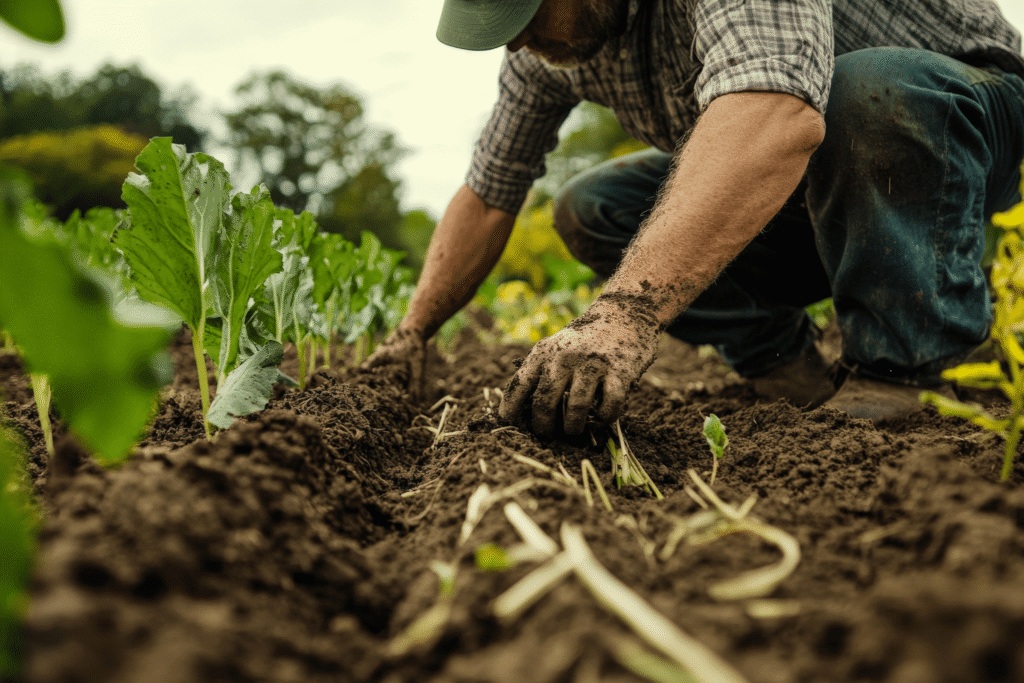
This is what Biodynamic farming looks like in practice. Not a label — a living decision made in how the land is used, right down to the fence line.
Why Bees Matter for Food: What You Eat Is Connected
When you fill your pantry with Doudlah Farms dry beans, sunflower seeds, or stone-ground flour, you are buying food grown in an environment actively designed to support the pollinators that make growing possible.
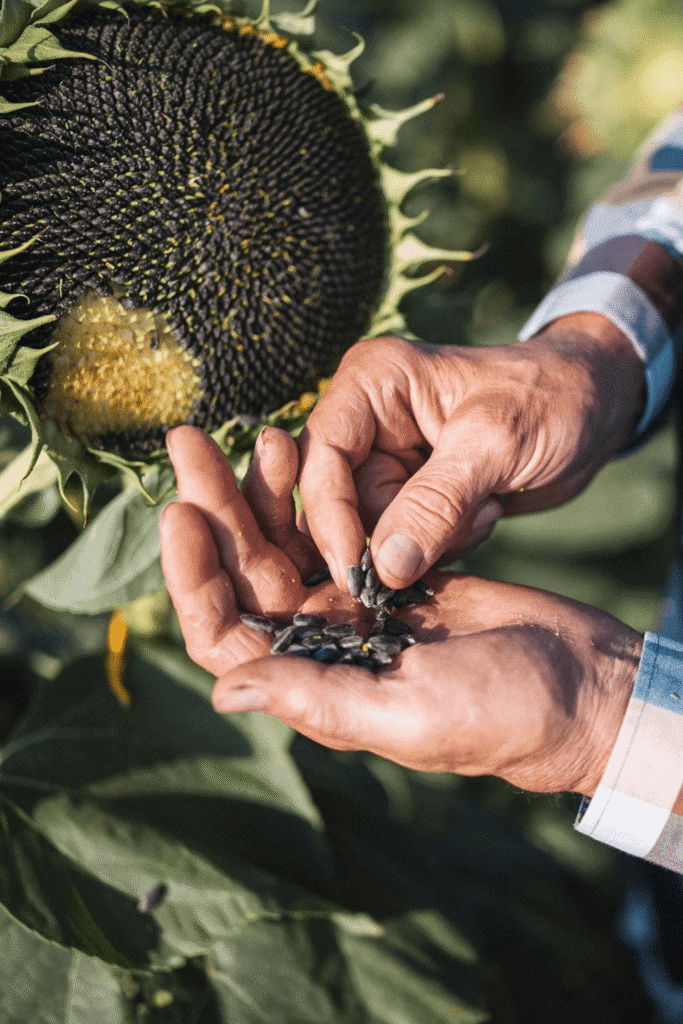
Beans — our core product — are self-pollinating but still benefit significantly from bee activity. Studies consistently show that fields with abundant bee populations produce higher seed set and more uniform yields. Sunflowers are more directly dependent: they are insect-pollinated crops, and the seeds we grow are harvested from plants that need pollinators to do their work.
The connection between bees and food is not abstract. It is measurable, season by season, field by field.
Shop our Wisconsin-grown sunflower seeds and dry beans →
What You Can Do From Your Kitchen
You do not have to farm to support bees. The choices you make at the grocery store and in your garden send real signals up the supply chain.
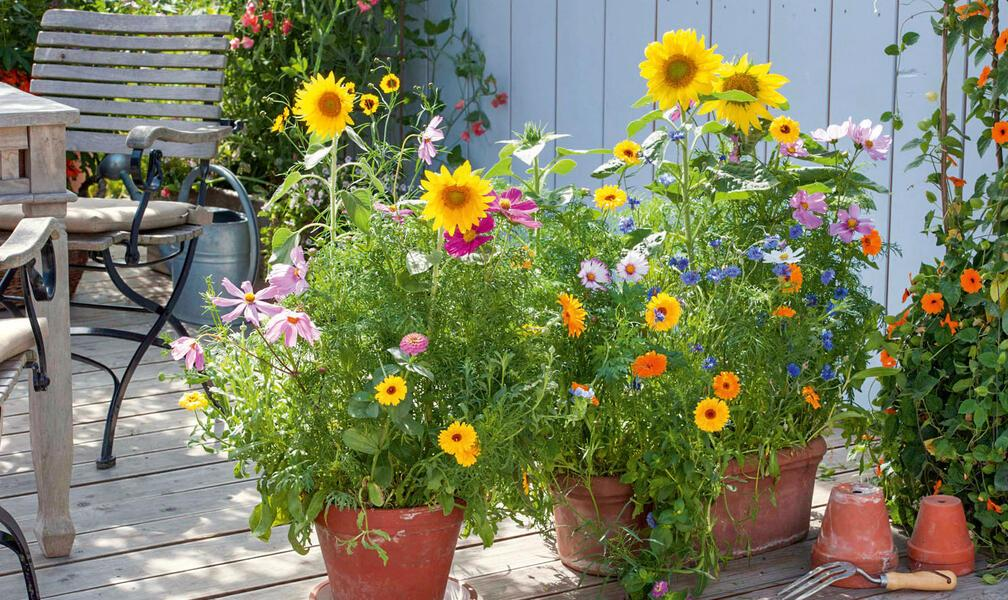
- Buy organic — your purchase reduces demand for the pesticides most harmful to pollinators
- Choose farms you trust — brands that can tell you exactly where your food comes from and how it was grown
- Plant native flowers — even a small patch of coneflower, lavender, or clover in a yard or balcony pot provides real forage
- Leave a corner a little wild — a patch of unmowed lawn with dandelions and clover is a pollinator resource
Every bag of Doudlah Farms product you buy helps support a farm that has made pollinator health a physical, visible, planted commitment. That is not marketing. That is a 35-foot strip of flowers beside a field.
Frequently Asked Questions About Soil Health and Biodiversity
Why are native bees considered so foundational to maintaining long-term soil health and biodiversity?
Bees are important to humans because they pollinate approximately one-third of the food supply in the United States and a significant portion globally. Without bees transferring pollen between flowers, most fruits, vegetables, nuts, and seeds would not reproduce. This includes many of the most nutritious foods in a human diet, from blueberries and almonds to squash and beans.
Why are bees important for food production?
Bees are essential for food production because they are primary pollinators for many crops. When bees carry pollen from plant to plant, they enable fertilization, which produces seeds and fruit. Crops that receive strong pollination produce more uniform yields, higher seed counts, and better-quality fruit than under-pollinated crops. Fields near healthy bee populations consistently outperform isolated fields.
What is causing bee population declines?
Bee population decline is driven by several interconnected factors: pesticide exposure (particularly systemic insecticides), habitat loss due to monoculture farming and development, parasites like the Varroa mite in honeybee colonies, disease, and climate disruption that shifts bloom timing out of sync with bee foraging. Conventional farming practices amplify multiple risk factors simultaneously.
What is a pollinator strip, and how does it help bees?
A pollinator strip is a dedicated planting of diverse flowering plants specifically chosen to attract and sustain bees and other beneficial insects. Unlike monoculture crops, pollinator strips include species that bloom at different times throughout the season, providing continuous nutrition. At Doudlah Farms, a 35-foot buffer zone required between our organic fields and neighboring conventional farmland has been planted as a pollinator strip, turning a regulatory boundary into an active habitat.
How does organic farming help bees?
Organic farming helps bees by eliminating synthetic pesticides, herbicides, and insecticides from the growing environment. Many of the chemicals most harmful to bees — including systemic insecticides — are prohibited under organic certification standards. At Doudlah Farms, our products are tested clean from over 220 chemicals, creating a significantly safer foraging environment for native bees and honeybees than conventional fields.
Can bees survive near conventional farms?
Bees can be significantly harmed near conventional farms due to pesticide drift, treated seeds, and herbicide use that eliminates flowering plants from the landscape. Organic farms like Doudlah Farms create buffer zones and plant pollinator strips to reduce these risks at the boundary with neighboring conventional operations. However, complete protection depends on broader landscape-level support for bee habitat.
Your health is deeply rooted in our soil. Shop Doudlah Farms products grown on land that takes pollinator health seriously: doudlahfarms.com/shop