Key Takeaways
- The USDA organic seal is part of a federally regulated program that took effect in 2002; labels like certified naturally grown, Non-GMO Project Verified, and animal welfare certifications are independent programs.
- USDA organic certification focuses on how crops, livestock, and food products are produced: no genetically modified organisms, no sewage sludge, no irradiation, and strict limits on synthetic fertilizers and pesticides.
- Products labeled organic must contain at least 95% organic ingredients, while products made with organic ingredients need at least 70% organic ingredients and cannot use the seal.
- Other labels may be useful, but they often focus on one issue, such as genetic engineering, animal handling, or local peer review.
- Doudlah Farms, with this article written by Asymmetric Applications in Wisconsin, treats USDA organic as a baseline while also caring about soil health, ecological balance, biodiversity, and animal welfare.
Introduction: Why Organic Labels Are So Confusing
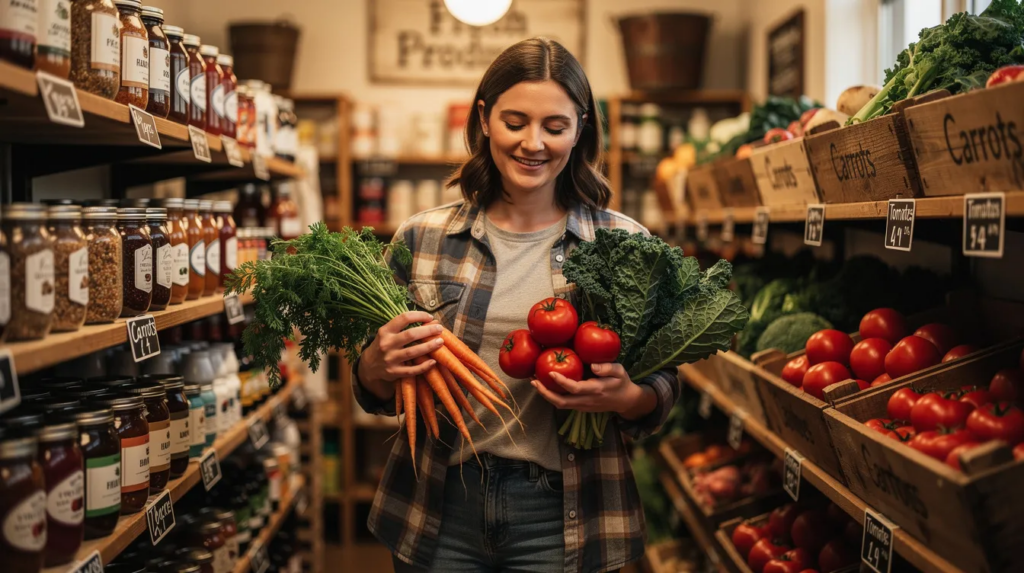
Picture a shopper in a Wisconsin food co-op in 2026. One bag says USDA certified organic. Another has a butterfly logo from the Non-GMO Project. A third says “all natural,” and a farmers’ market sign says the vegetables were grown using organic methods.
It is no wonder consumers feel stuck. Organic foods have grown into a tens-of-billions-of-dollars market in the United States, so clear organic labeling matters for food safety, human health, and trust.
This guide compares USDA organic with other organic products and eco-labels so you can make confident choices for your family and support certified farms like Doudlah Farms.
We will keep the language practical, explain the certification process, and include a Q&A plus FAQ for quick reference.
What USDA Organic Certification Really Means
The USDA’s National Organic Program, managed through the Agricultural Marketing Service, created one national standard for organic agricultural products. The final rule was published in 2000, and full organic standards took effect in 2002.
In the United States, “organic” is a labeling term for food or agricultural products that have been produced according to USDA organic regulations. Those standards integrate cultural, biological, and mechanical practices that foster cycling of resources, promote ecological balance, and conserve biodiversity.
Before an organic operation may sell, label, or represent products as organic, land used to produce raw organic commodities must complete a 3-year transition period without prohibited substances. Any farm or business grossing more than $5,000 annually in organic sales must be certified; exempt smaller sellers must still follow most USDA regulations.
To achieve USDA organic certification, operations submit an application to a usda accredited certifying agent. The certifying agent reviews the organic system plan, inspects the farm, verifies compliance, and issues an organic certificate if the operation meets requirements.
The USDA National Organic Program legally mandates specific practices that differentiate organic farming from conventional methods. Conventional farming relies heavily on synthetic chemical pesticides and artificial fertilizers, while organic farming prohibits their use. The use of Genetically Modified Organisms (GMOs), sewage sludge, and ionizing radiation is strictly banned in USDA organic production.
Organic farmers must use physical, mechanical, or biological methods for pest and weed management. At Doudlah Farms, that can include crop rotations, cover crops, composting, approved natural substances, seed sources review, and careful record keeping.
Organic standards require proactive soil-building practices, including mandatory crop rotations, cover crops, and composting to maintain soil fertility and water retention. By utilizing climate-smart practices like cover crops and reduced tillage, organic farms improve soil health and increase carbon sequestration.
USDA organic also covers livestock. Livestock must be raised in living conditions that accommodate natural behaviors and must be fed 100% organic feed, with no antibiotics or growth hormones allowed.
Decoding the USDA Organic Seal and Labeling Categories
Not every package in the organic aisle follows the same labeling category. USDA’s National Organic Program regulates labeling requirements for organic agricultural products, ensuring that products labeled “organic” must contain at least 95% organic ingredients without synthetic growth hormones, antibiotics, or pesticides used in production or processing.
The USDA categorizes organic products into three distinct tiers based on ingredient percentages: 100% Organic, Organic, and Made With Organic Ingredients. Products with less than 70% organic ingredients have a separate limited option for identifying specific certified organic ingredients on the information panel.
- 100% organic: all ingredients except water and salt are certified organic. The finished product may display the USDA organic seal and must list the certifying agent.
- organic: at least 95% certified organic ingredients; the remaining ingredients must be allowed on the national list.
- made with organic: products that contain at least 70% organic ingredients can be labeled “made with organic ingredients,” but they cannot use the USDA organic seal on packaging.
- Less than 70%: may identify organic ingredients only in the ingredient list, not as a front-of-package claim.
Labels and seals must be reviewed by a USDA-accredited certifying agent before market launch. This applies to organic fruit, other organic fruit blends, organic grapes, organic dill, grains, sauces, and many other organic products.
There are special rules for some items. For example, wine labeled organic faces restrictions on added sulfites, and food processors must follow rules when they process products with organic ingredients. Organic processed foods must avoid artificial preservatives and many additives, though shoppers should still read nutrition labels.
USDA Organic vs. Non-GMO Project: How Are They Different?
USDA organic certification automatically prohibits genetically modified organisms and genetic engineering. That means USDA organic products are non-GMO by law.
The Non-GMO Project is an independent nonprofit that verifies products against the non gmo project standard. Its butterfly label helps consumers identify verified non-GMO choices, but it does not cover the full scope of organic production.
A non-GMO product’s label can appear on food grown with synthetic pesticides, chemical fertilizers, or conventional monocropping. By contrast, certified organic farming restricts those inputs, requires records, and checks full compliance through inspections.
Some brands use both labels. If you must choose one, USDA organic gives broader protection: GMO avoidance plus restrictions on synthetic chemicals, sewage sludge, irradiation, and certain processing methods.
USDA Organic vs. Certified Naturally Grown and Other “Farmer-Led” Labels
Certified Naturally Grown is a non-profit alternative eco-labeling program for small farms in the US that use USDA Organic methods but are not part of the USDA Certified Organic program.
CNG standards are modeled closely on USDA rules: no synthetic fertilizers, no synthetic pesticides, no GMOs, and an emphasis on improving soil. The difference is oversight. CNG uses farmer-to-farmer peer inspections rather than accredited agents under the federal organic program.
Products certified naturally grown are not the same as USDA certified organic, and generally cannot be sold in interstate commerce as labeled organic unless the farm is USDA certified.
Some small Wisconsin farmers choose CNG because federal certification costs and legal requirements can feel prohibitive. In the UK, the Wholesome Food Association represents smaller-scale growers using “natural” growing methods and issues a symbol based on trust and peer-to-peer inspection.
Alternative certification systems are emerging to provide options for producers who find the cost and legal requirements of USDA certification prohibitive, using terms like “authentic” and “natural.” Doudlah Farms chooses USDA certification because it gives consumers a widely recognized label and opens broader market access.
USDA Organic vs. “Natural,” “All Natural,” and Other Non-Certified Claims
“Natural,” “all natural,” and “farm fresh” sound reassuring, but they do not guarantee organic certification, non-GMO status, or reduced pesticide use.
Non-certified claims mostly rely on producer self-claims without mandatory third-party audits. That is very different from USDA organic regulations, which require documentation, inspection, and enforcement to protect consumers.
Claims like “hormone-free,” “raised without antibiotics,” “cage-free,” and “free-range” may matter, but each covers a narrow issue. USDA organic combines many requirements: no GMOs, no routine antibiotics, no growth hormones, and strict limits on synthetic inputs.
Practical advice: treat generic “natural” language as marketing unless it is backed by credible certification.
Where Animal Welfare Fits Into USDA Organic and Other Labels
Many shoppers assume USDA organic automatically means the highest animal welfare standard. The truth is more nuanced.
Organic livestock must have outdoor access, natural living conditions, and are never allowed antibiotics or growth hormones. Organic livestock cannot receive routine antibiotics, reducing human exposure to antibiotic-resistant bacteria through the consumption of organic meat and dairy.
Recent USDA livestock updates also clarify living conditions, outdoor access, and handling standards. Still, dedicated welfare labels such as Animal Welfare Approved or American Humane Certified can include more species-specific detail.
Organic milk and meat consistently show higher levels of omega-3 fatty acids due to the mandatory pasture grazing of the animals. Farms may pair organic certification with additional welfare practices when they want to go beyond minimum rules.
How Organic Certification Works in Practice for Farms Like Doudlah Farms
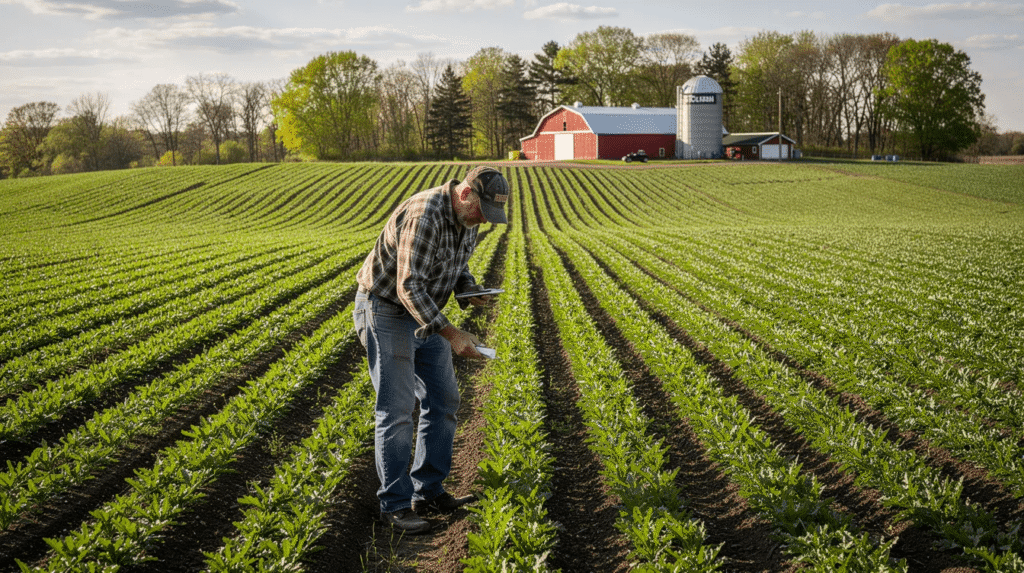
For a Wisconsin farm, certification is not just a sticker. It begins with a three-year transition away from synthetic fertilizers and prohibited pesticides. The USDA Organic certification process requires a three-year transition period during which any land used to produce organic commodities must be free from prohibited substances before it can be labeled as organic.
The core steps are straightforward:
- Choose a usda accredited certifying agent.
- Submit an organic system plan.
- Complete an on-site inspection.
- Correct any noncompliances.
- Maintain records for annual renewal.
To achieve USDA Organic certification, operations must submit an application to a USDA-accredited certifying agent, who will review the application and conduct an inspection to verify compliance with organic regulations. Producers must maintain extensive logs tracking seed sources, soil amendments, and harvests, and undergo annual on-site inspections by USDA-accredited certifying agents.
That means field histories, input logs, harvest records, storage notes, and separation of organic and non-organic crops. Certified operations also prepare for audits that verify every crop and sale.
The reward is real. The USDA Organic certification confirms that the farm or handling facility complies with USDA organic regulations, and any farm or business that grosses more than $5,000 annually in organic sales must be certified. The seal can help organic producers reach co-ops, regional grocers, online buyers, and direct consumers.
USDA Organic vs. “Beyond Organic” and Regenerative Approaches
Some farmers describe their work as “beyond organic” or regenerative because they want to focus on measurable soil health, carbon, pollinators, and water quality.
USDA organic is a strong baseline. Regenerative approaches may add continuous cover, reduced tillage, diverse rotations, livestock integration, habitat strips, and long-term soil testing.
Organic methods reduce greenhouse gas emissions and prevent toxic runoff from synthetic chemicals, protecting local waterways and aquatic ecosystems. Organic farming also promotes biodiversity by avoiding synthetic chemicals that harm beneficial insects and relying on diverse crop ecosystems.
These practices matter in Wisconsin, where heavy rains, snowmelt, and changing water systems can affect erosion and nutrient loss. For Doudlah Farms, USDA organic is the starting point, not the ceiling.
Q&A: Common Consumer Questions About Organic Labels
Is USDA organic food always more nutritious?
Not always. Studies show that organic produce often contains higher levels of antioxidants like polyphenols and essential minerals such as Vitamin C, iron, and magnesium due to stronger natural defense mechanisms developed by the plants. Organic grains exhibit significantly lower levels of cadmium compared to conventional crops. Still, the clearer everyday benefit is often lower residue: organic foods carry significantly less synthetic pesticide residue, which is crucial for pregnant individuals and children.
Do imported organic products meet the same standards?
Imported USDA organic products must come through USDA-recognized systems, certifiers, or equivalency agreements. Documentation and traceability are still required.
How can I verify a product is really organic?
Look for the USDA organic seal, the certifier name, lot codes, and clear organic labeling. If something seems suspicious, report it to the National Organic Program.
Is local non-certified food better than certified organic from far away?
It depends on your priorities. Local food supports nearby farmers and can offer transparency. Certified organic gives legal assurance. Ideally, get both by supporting certified farms in your region.
How to Choose Between USDA Organic and Other Certifications When You Shop
For Wisconsin families, students, and seniors watching budgets, labels should help rather than overwhelm.
Start with your main priority.
- If avoiding pesticides and GMOs matters most, choose USDA organic or 100% organic first.
- If animal welfare is the priority, look for USDA organic plus a strong welfare label.
- If the budget is tight, prioritize organic products commonly associated with higher pesticide residues.
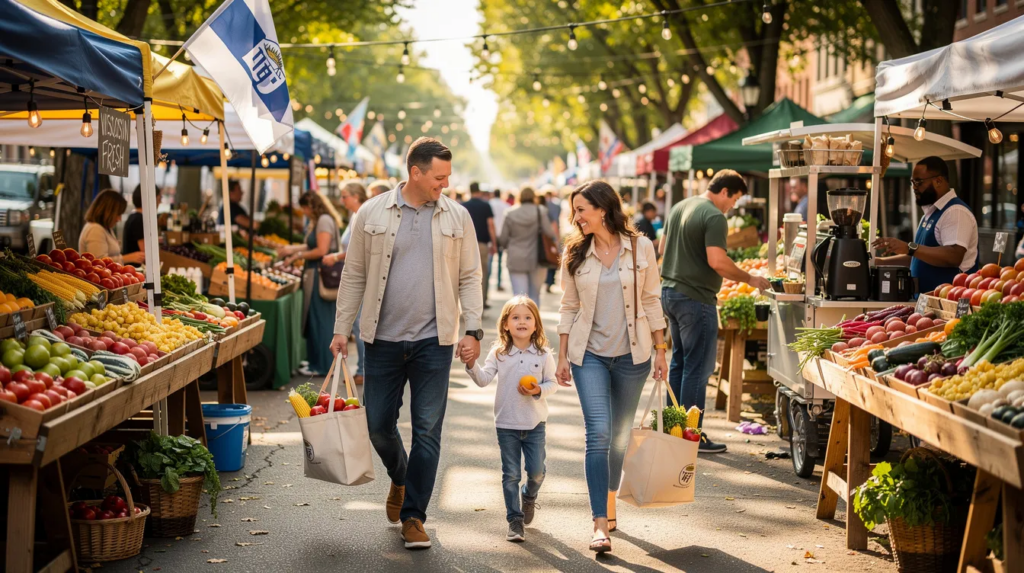
- If you shop at a farmers’ market, ask farmers how they manage weeds, pests, crops, livestock, and compliance.
The core benefits of choosing USDA organic products include reduced exposure to synthetic chemicals, higher levels of certain nutrients, and mandatory sustainable farming practices that protect the environment.
FAQ About the Organic Certification Process
These quick answers cover a few remaining questions shoppers often ask Doudlah Farms and Asymmetric Applications.
Is USDA organic the same thing as “chemical-free” farming?
No. USDA organic prohibits most synthetic pesticides and fertilizers, but it allows certain natural inputs and limited approved synthetic materials on the national list. Organic farms mainly rely on crop rotation, cover crops, mechanical weed control, and documented inputs.
Why does food undergo a multi-year transition, and why does the organic certification process sometimes raise consumer costs?
Organic farming often requires more labor, more diverse rotations, and more careful weed control. Certification fees, record keeping, inspections, and possible lower yields during the three-year transition can also raise costs for small and mid-sized Wisconsin farms.
Can organic products still be processed foods?
Yes. Organic processed foods such as cereals, snacks, frozen meals, and sauces can be certified if they meet ingredient and processing rules. They may avoid many artificial preservatives, but they can still contain sugar, salt, or fat, so read the nutrition label.
Does USDA organic certification apply to pet food and other non-human products?
Yes, USDA organic standards can apply to pet food and certain body care items if they contain agricultural ingredients and are certified by a USDA-accredited agent. For cosmetics or shampoos, look carefully because some “organic-style” claims follow private standards rather than USDA rules.
How does Wisconsin’s climate affect organic farming practices?
Cold winters, short growing seasons, spring floods, summer droughts, and fall frosts make organic production more demanding in the Upper Midwest. Farms like Doudlah Farms rely on cover crops, rotations, soil testing, local knowledge, and experimentation to build resilience without synthetic quick fixes.