Key Takeaways
Soil regeneration is the foundation of regenerative agriculture. It directly boosts yields, conserves water, and increases resilience to climate change on real Midwest farms like Doudlah Farms in Wisconsin. After two decades of transition, the results speak for themselves: healthier fields, more stable harvests, and lower input costs.
- Healthy soil rich in organic matter supports stronger plant growth, reduces soil erosion, and cuts input costs over time as fields become more self-sustaining.
- Regenerative practices such as cover crops, no-till, diverse rotations, and grazing livestock work together to rebuild degraded soil instead of simply slowing soil degradation.
- Doudlah Farms has been transitioning to regenerative, organic farming since the 2000s, demonstrating that these approaches are practical at the field scale, not just theory.
- Soil regeneration benefits human health by improving nutrient content in food and reducing chemical exposure, aligning with Doudlah Farms’ commitment to organic, soil-first production.
- Regenerated soils have higher nutrient content than depleted soils, and they require less fertilizer for optimal crop performance.
Introduction: Why Soil Regeneration Matters Now
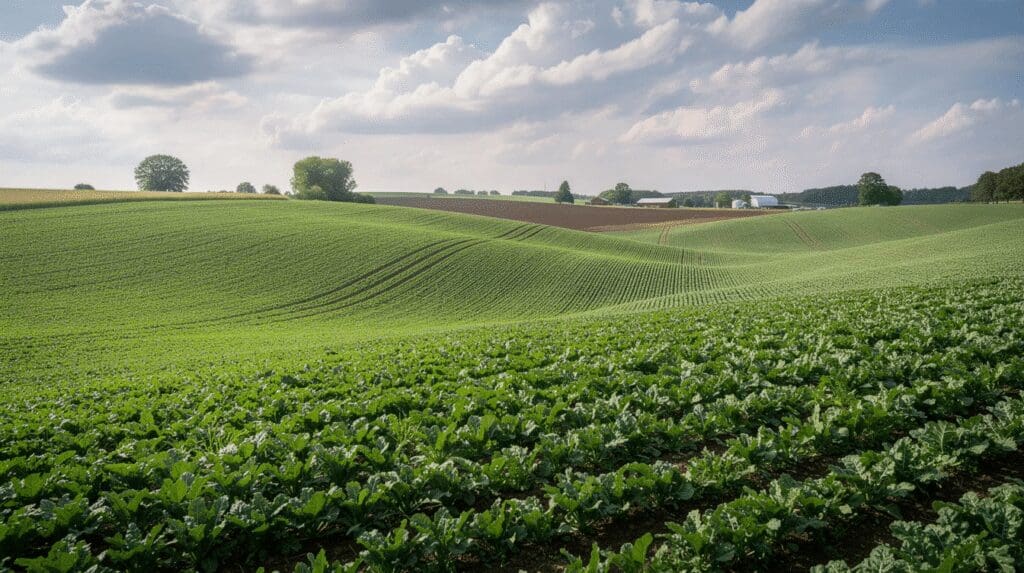
Across the U.S. Midwest, farmers face a compounding set of problems: decades of topsoil loss, more frequent droughts and heavy rains driven by rising temperatures, and input costs that keep climbing. Wisconsin is no exception. Fields that once produced dependably now struggle to hold moisture in dry years and shed water in wet ones.
Soil regeneration means actively rebuilding soil structure, organic matter, and biology so that soil becomes more fertile and resilient each year instead of slowly degrading. It is the engine of regenerative agriculture, and it goes well beyond simply doing “less harm” with conventional methods.
At Doudlah Farms in Wisconsin, we have seen first-hand that rebuilding healthy soil improves yields and stability across both wet years and dry years. Soil regeneration restores the health and functionality of degraded soil, and it does so by working with natural processes rather than against them.
This article is practical, evidence-based, and focused on real regenerative practices farmers can implement on working fields. Whether you manage a thousand-acre grain operation or a backyard garden, the principles are the same.
What Is Soil Regeneration Farming?
Soil regeneration farming is a system of regenerative practices that restores soil function, increases organic matter, and reverses soil degradation caused by decades of intensive tillage and chemical inputs. It treats the field as a living system rather than a chemistry problem.
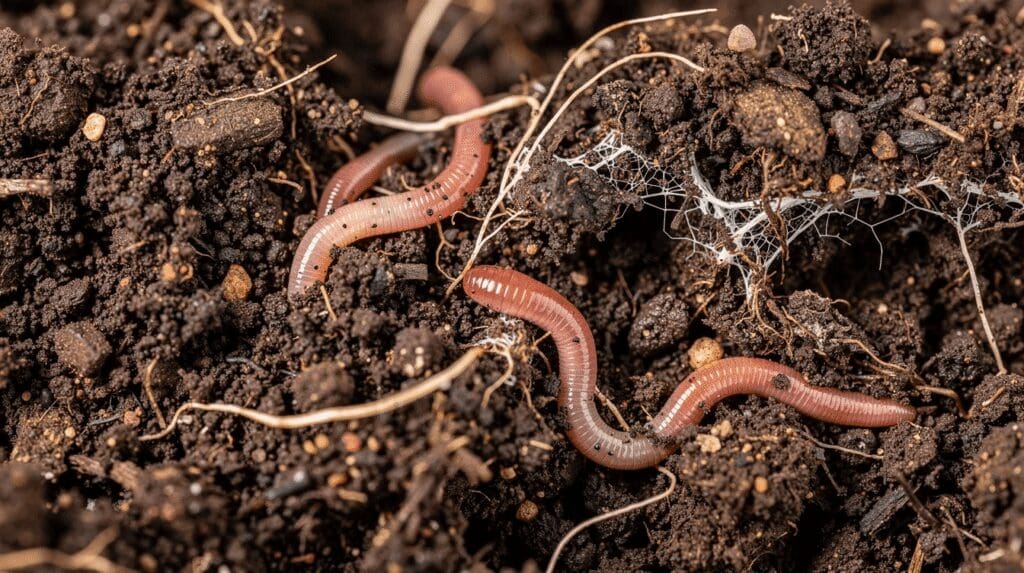
Healthy soil is a living ecosystem made of mineral soil particles, organic matter, water, air, plant roots, fungi, and billions of soil microorganisms per teaspoon. Diverse soil communities help with the decomposition of organic matter and nutrient recycling, turning dead plant material into plant-available nutrients. Recent research shows that the soil microbiome explains 2.27% to 14.08% of multifunctionality variance across different soil functions, underscoring how central biology is to field performance.
Regenerating soil improves its soil structure by building more aggregates and pore space. This, in turn, improves water infiltration, nutrient retention, and root growth. It enhances plant growth by ensuring continuous nutrient cycling and better access to water during dry spells. Soil regeneration enhances biological activity and microbial populations, creating a feedback loop where healthier biology builds healthier soil conditions year after year.
This goes beyond “sustainable.” Sustainable agriculture aims to maintain soil quality. Soil regeneration aims to improve soil quality with every passing season.
Why Soil Regeneration Is Crucial for Food and Human Health
The connection between soil health and human health is direct. Degraded soil grows less nutrient-dense food, which increases reliance on synthetic fertilizers and pesticides to prop up yields. Research comparing regenerative and conventional farms found that regenerative farms produced crops with higher micronutrient profiles, including zinc, iron, and manganese, grown in soils with organic matter averaging roughly 6.3% versus 3.5% on conventional farms.
Reduced pesticide and synthetic fertilizer use on regenerating soils lowers potential exposure for farm families, rural communities, and consumers. Organic farming promotes healthier, nutrient-rich soils by eliminating these inputs and relying on biological fertility instead. At Doudlah Farms, soil serves as the first line of defense for crop health, not chemical rescue treatments.
The broader public-health benefits are significant. Healthy soils reduce runoff and nutrient contamination in waterways, protecting drinking water supplies. Less soil erosion means less dust and better air quality. And when soil biota thrive, the entire food web from field to fork carries more of what human bodies need.
Causes of Soil Degradation on Modern Farms
Understanding how we got here is essential before discussing solutions. Common 20th-century agricultural practices across North America created a cascade of soil degradation and widespread soil erosion.
Frequent deep tillage breaks apart soil aggregates, exposes organic matter to rapid oxidation, and accelerates the loss of soil organic carbon. Over-cultivation leads to soil compaction and nutrient loss, creating hard pans that restrict root penetration and water movement. Cropland soils show 24.2% lower multifunctionality than grasslands, largely because of this repeated disturbance.
Overuse of chemical fertilizers and pesticides disrupts soil biology. Overuse of pesticides can harm soil structure and soil biodiversity, reducing earthworms, mycorrhizal fungi, and beneficial bacteria that support plant growth. The soil organisms that once drove nutrient availability are sidelined in favor of purchased inputs.
Water management failures compound the problem. Excessive irrigation can cause nutrient leaching into groundwater, stripping nitrogen and other nutrients from the root zone. Poor drainage can lead to waterlogged soils and reduced oxygen, suffocating roots and soil microorganisms. Even acidic soils worsen under continuous synthetic nitrogen application.
Continuous monoculture systems-corn after corn, or tight corn-soybean rotations-starve the soil microbiome of plant diversity. Without diverse root exudates and residue types, fields grow more vulnerable to pests, diseases, and weather extremes. Overgrazing is the most common cause of soil degradation globally, stripping ground cover and compacting surface layers.
Soil Erosion, Climate Change, and the Carbon Cycle
Soil erosion and soil degradation contribute directly to climate change by releasing stored carbon into the atmosphere as greenhouse gases. Soils hold more carbon than the atmosphere and all vegetation combined, making them the largest terrestrial carbon pool. When we till, erode, or degrade soil, we unlock that stored carbon and accelerate warming.
Bare, tilled fields in places like the Upper Midwest are especially vulnerable to both wind erosion and water erosion during heavy spring rains. Every ton of topsoil lost carries organic carbon, nitrogen, and the biological communities that took years to build.
Soil regeneration practices reverse this. Increasing soil organic matter both stabilizes soil particles against erosion and allows fields to sequester carbon for years to decades. Healthy soils capture and store atmospheric carbon dioxide through carbon sequestration, pulling CO₂ out of the air and locking it into stable mineral-associated organic carbon. A multi-model study of Midwestern U.S. croplands found that combining no-till with cover crops increased soil organic carbon accrual by about 0.36 metric tons of carbon per hectare per year in the top 30 cm.
At the farm level, soils rich in organic matter buffer against drought because they hold more water. They handle heavy rains because the aggregated soil structure drains without washing away. This resilience matters as climate change drives more erratic weather patterns across Wisconsin and the broader Midwest.
Benefits of Regenerating Soil: From Field to Ecosystem
The benefits of efforts to regenerate soil are multi-layered. They start in the field and ripple outward into the ecosystem and community.
Regenerated soil with higher organic matter increases water-holding capacity. Every 1% increase in organic matter can help topsoil hold an additional 20,000 gallons of water per acre. Soil regeneration improves water retention capacity significantly, meaning crops survive longer between rain events and farmers spend less on irrigation.
Improved soil structure and microbial activity increase nutrient availability, reducing dependence on purchased fertilizers over time. Regenerated soils require less fertilizer for optimal crop performance because biology does the work that synthetic inputs used to do. Healthy soils can retain more water and nutrients simultaneously.
Stronger, well-nourished plants resist disease better, reducing pressure to use fungicides and insecticides. This reduces reliance on chemical inputs and cuts costs. Biodiversity restoration in soil supports a richer above-ground ecosystem, including pollinators, beneficial insects, and songbirds. Soil regeneration practices can improve water quality and reduce runoff, protecting local streams and lakes from sediment and nutrient contamination.
These ecosystem services-cleaner water, carbon storage, flood buffering, pollinator habitat-benefit communities far beyond the field boundary. They are ecosystem functions that healthy land provides for free when soil is managed well.
Five Core Principles of Soil Regeneration
Successful regenerative farms around the world and in Wisconsin follow a consistent set of basic principles, even when specific practices vary depending on soil texture, climate, and crop goals.
The five core principles are:
- Keep soil covered – Use residues, cover crops, or mulches to protect the surface from erosion, temperature extremes, and moisture loss.
- Minimize soil disturbance – Reduce tillage to preserve aggregates, pore networks, and biological communities.
- Maintain living roots year-round – Living roots feed soil microorganisms through root exudates, sustaining the biological engine of soil fertility.
- Maximize plant diversity – Rotate crops and use multi-species cover crop blends to feed a wide range of soil biota and break pest cycles.
- Integrate livestock where possible – Grazing animals cycle nutrients, stimulate plant regrowth, and distribute organic materials across the landscape.
These principles work as a system. Adopting one practice-like cover crop delivers more benefit when combined with reduced tillage and diverse rotations. Doudlah Farms applies these principles through organic crop rotations, cover crops, and careful residue management adapted to local soils and environmental conditions. The sections below translate each principle into practical strategies.
Keeping Soil Covered: Armor Against Erosion
Bare soil is vulnerable. Without cover, raindrops hammer the surface, dislodge soil particles, seal pores with crust, and launch runoff. Wind strips exposed topsoil from dry fields. Erosion prevention is enhanced through healthy soil structure and plant cover working together.
“Soil armor” means keeping the surface protected at all times using crop residues, cover crops, and mulches. Practical examples include leaving corn stover on the field over winter, drilling rye or oats after soybean harvest, or using rolled cover crops as mulch in organic systems. Even materials like wood chips can protect high-traffic areas around headlands and waterways.
Surface cover moderates soil temperature, conserves water, and slows raindrops enough to prevent crusting and runoff. At Doudlah Farms, residue is managed carefully so that planters operate effectively in high-residue, reduced-till systems while the soil stays protected year-round.
Minimizing Disturbance: From Plow to No-Till
Conventional moldboard plowing inverts the top 8–12 inches of soil, destroying aggregates, severing fungal networks, and exposing buried carbon to rapid oxidation. Regenerative agriculture minimizes tillage to preserve soil structure and microbial life.
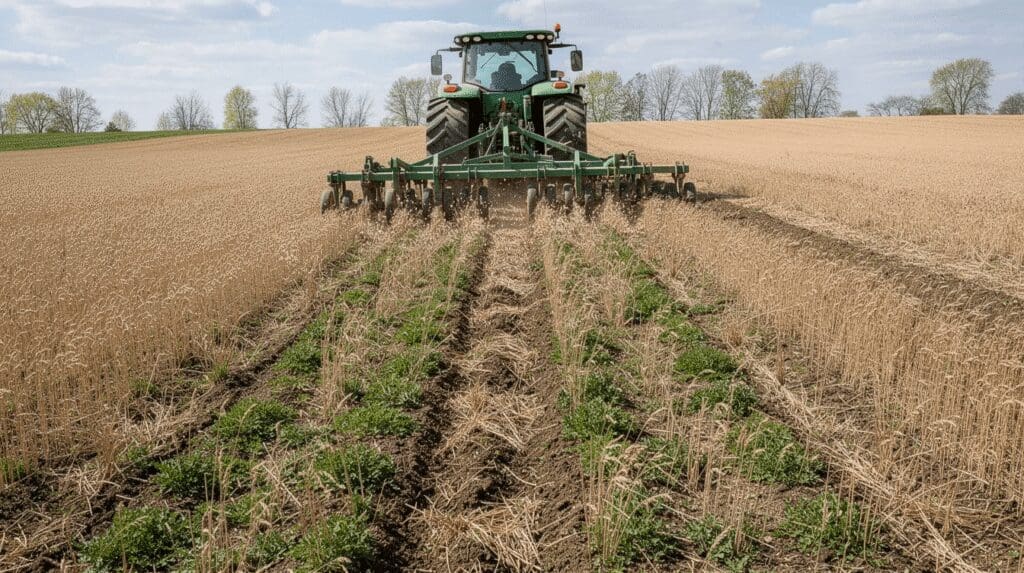
Minimizing soil disturbance protects the pore networks that allow roots, water, air, and soil organisms to move freely. Reduced tillage enhances soil structure and microbial diversity by letting biological communities establish and persist. Equipment options for transition include strip-till, shallow vertical tillage, and no-till drills adapted for heavy residues.
Common concerns include initial yield drag, residue interference, and weed pressure. Pairing no-till with cover crops mitigates most of these issues: cover crops suppress weeds, moderate residue, and improve seed-soil contact. In organic systems, carefully timed mechanical passes can manage weeds without full inversion tillage.
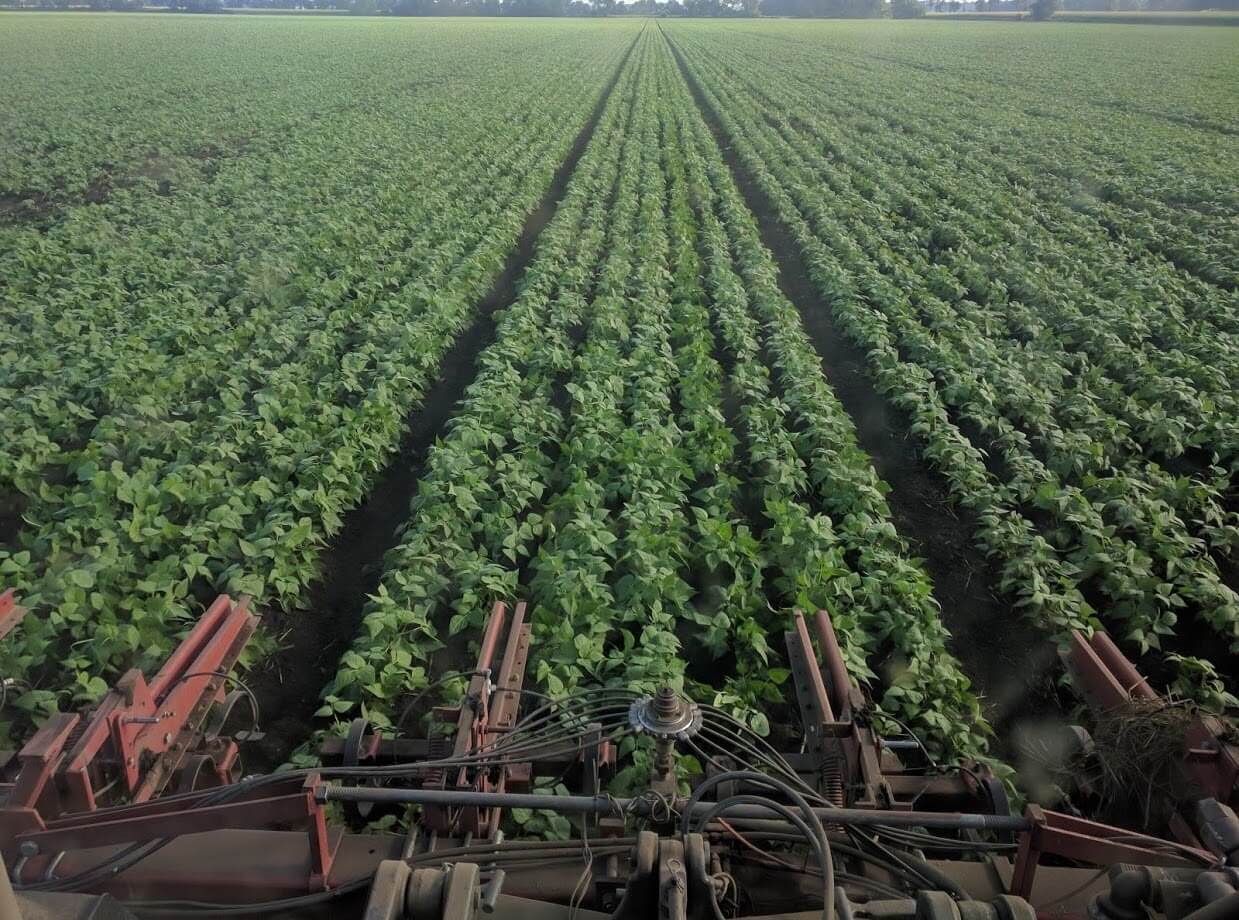
Doudlah Farms uses precisely timed field passes and permanent traffic lanes to reduce soil compaction and soil disturbance on their regenerative, organic acres. The result is soil that breathes, drains, and feeds roots more effectively each season.
Building Organic Matter With Compost and Other Organic Materials
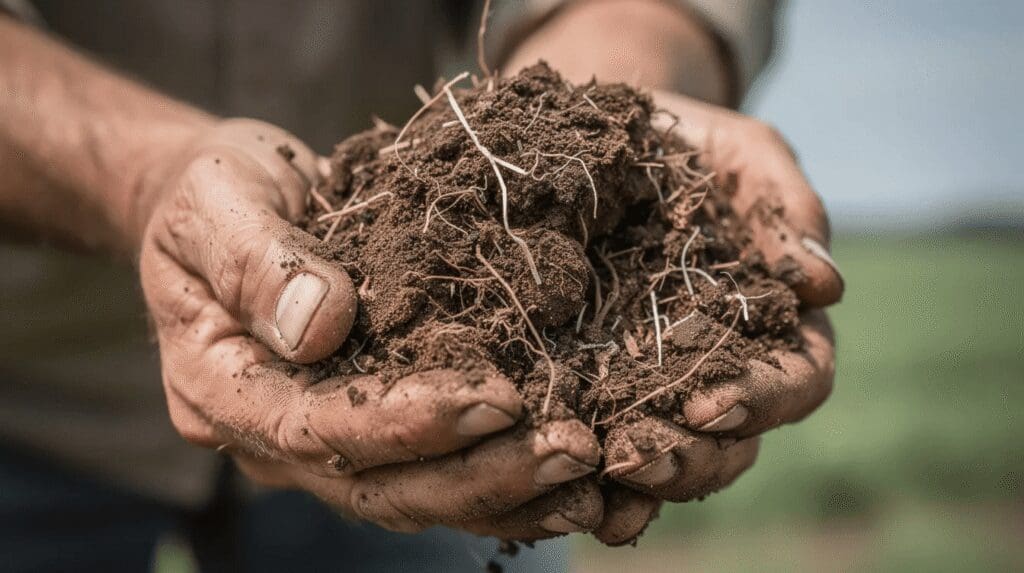
Organic matter is the engine of healthy soil. It drives nutrient cycling, water retention, and soil structure. Without it, soil becomes an inorganic material with limited capacity to support plant growth.
Compost made from food scraps, crop residues, and animal manure is a stable source of organic matter and nutrients. The composting process transforms raw waste into a biologically active soil amendment. Composting improves soil quality by adding nutrients and organic matter in forms that soil microorganisms can process efficiently. Composting increases soil organic matter and nutrient content with every application. Compost enhances water retention in soil, improving plant growth even in dry years.
On-farm composting or sourcing local compost products reduces waste. Composting reduces landfill waste by recycling organic materials, and it can reduce methane emissions from landfills by 58%. Composting supports local economies by creating jobs in organic recycling, turning a waste problem into a soil solution.
Additional organic amendments farmers can use include green manures, cover crop biomass, mulched prunings, and bedding pack manure. Each adds organic matter to the soil in different forms and at different rates.
Doudlah Farms prioritizes organic fertility sources. Composted manures, cover crop biomass, and crop residues feed soil microbes and build long-term soil health. Every application of compost or other organic matter adds organic matter that compounds over the years.
Plant Diversity, Cover Crops, and Continuous Living Roots
Diverse plant species feed different soil organisms, which strengthens the entire soil food web and improves multifunctionality. Increasing crop diversity helps to disrupt pest cycles and supports soil microorganisms by providing varied root exudates, residue chemistry, and canopy structures. Plant diversity promotes soil microbial activity and nutrient cycling at every level of the profile.
Common cover crop mixes in regenerative systems include blends of rye, clover, vetch, radish, and oats tailored to local climate and cash crop rotations. Cover cropping improves soil health and reduces erosion by keeping the ground protected and root systems active between cash crops.
Maintaining living roots in the soil supports soil health and microbial activity year-round. Roots exude sugars and amino acids that feed beneficial microbes, and those microbes in turn stabilize soil aggregates and cycle nutrients. Recent research on deep Midwestern soils shows that deep-rooted species contribute stable carbon below the surface layers, building mineral-associated organic carbon that persists for decades.
Concrete rotation examples include corn–soy–small grain–multi-species cover crop sequences, or perennial hay breaks to rebuild intensely cropped fields. At Doudlah Farms, diverse rotations and cover crop cocktails reduce pest cycles, improve weed suppression, and supply biologically fixed nitrogen without synthetic inputs, supporting soil fertility naturally.
Integrating Livestock to Regenerate Soil
Well-managed grazing reconnects animals and cropland, closing nutrient loops that modern agriculture broke decades ago. Integrating livestock returns nutrients to the soil through manure, distributing fertility across fields rather than concentrating it in lagoons or feedlots.
Rotational and adaptive grazing stimulates pasture regrowth, increases root depth, and distributes manure and urine evenly. A Wisconsin dairy farm using adaptive multi-paddock grazing increased soil organic matter from 3.5% to 5.1% over six years, while infiltration rates doubled. Practical options include grazing cover crops after harvest, moving cattle or sheep through small paddocks with portable fencing, and allowing rest periods for forage recovery.
Benefits extend beyond soil fertility: reduced need for purchased feed, healthier livestock on more diverse diets, and improved forage quality over time. Even crop-only farms can partner with neighboring graziers to bring animals onto cover-cropped fields, sharing the soil and economic benefits. The key is managed movement, not continuous grazing that leads to compaction and bare ground.
Water: How Regenerated Soil Conserves Water and Reduces Flood Risk
One of the most practical payoffs of soil regeneration is how it transforms water management on the farm. Regenerated soil conserves water during drought and absorbs it during downpours, reducing both irrigation needs and flood risk.
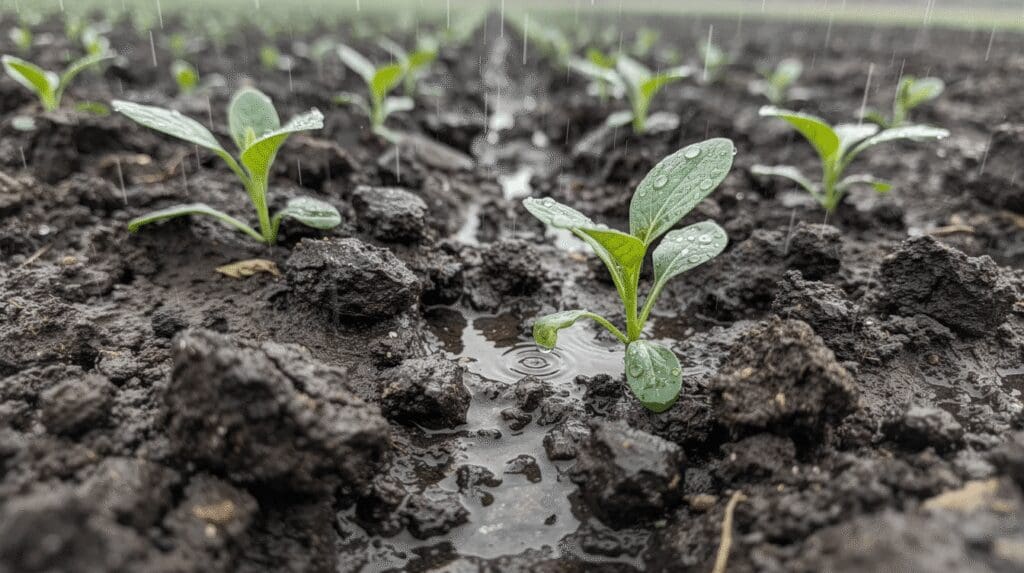
Increased organic matter and better soil structure create more pore space. Water infiltrates quickly instead of ponding or running off. Field-level outcomes include reduced surface crusting, better root access to deeper moisture, and fewer washouts after heavy storms. Soil regeneration improves water retention capacity significantly-each percentage point of organic matter gained translates to thousands of additional gallons held per acre.
Healthier soil conserves water not only for crops but also for entire watersheds by slowly releasing stored water into streams and aquifers. This is critical water quality protection for downstream communities. At Doudlah Farms, improved water infiltration and fewer erosion gullies have followed directly from increasing soil organic matter on regenerative, organic fields. The soil acts like a sponge, not a parking lot.
Transitioning a Conventional Farm to Regenerative Practices
Most farmers cannot change everything in a single season. Successful soil regeneration often follows a 5–10 year transition timeline, and the first step is simply starting.
A phased approach works best:
- Start with one or two fields – Choose lower-risk acres for experimentation.
- Introduce cover crops after harvest – Even a simple cereal rye planting after corn or soybeans begins building biology.
- Gradually reduce tillage intensity – Move from moldboard to vertical till to strip-till over several seasons.
- Diversify crop rotations – Add small grains, forages, or multi-species covers to break monoculture patterns.
Proper soil management requires testing to guide the use of fertilizers and soil amendments. Baseline assessments should include infiltration tests, earthworm counts, bulk density checks, and soil organic matter measurements through local labs. These benchmarks let you track progress.
Financial concerns are real. Experiment on lower-risk fields first, work with local NRCS or conservation districts, and evaluate cost-share or incentive programs available in your state. Many farmers find that reduced input costs offset any short-term yield variability within a few years.
Doudlah Farms moved step-by-step from conventional to certified organic and regenerative practices over many years. Yield and profitability improved as soils rebuilt, proof that patience and persistence pay off in agriculture as in any long-term investment.
Soil Regeneration, Organic Farming, and Climate Resilience at Doudlah Farms
Doudlah Farms is an organic, regenerative farm committed to rebuilding soil while producing high-quality food for Wisconsin families. Our mission is straightforward: grow food in a way that leaves the land better than we found it.
Specific practices on the farm include certified organic rotations, perennial forages, multi-species cover crops, composted manures, and reduced soil disturbance where practical. Every decision runs through a simple filter: does this feed the soil or deplete it?
Regenerated soils have helped the farm handle real weather events with less yield loss than neighbors on conventional systems. Heavy rains that would have caused significant impacts on bare, compacted fields drained through our soils. Dry spells that stressed neighboring crops were buffered by organic matter holding moisture in the root zone.
Over roughly a decade of consistent regenerative management, soil organic matter levels have climbed measurably. The improvements compound: better biology drives better structure, which drives better water management, which drives better yields and less need for adding nutrients from off-farm sources.
This soil-first approach supports cleaner local water, stronger rural economies, and more resilient food systems across Wisconsin. Soil regeneration is not just a farming strategy. It is a community investment.
How Long Does It Take to Regenerate Soil?
Soil regeneration is a multi-year process. But noticeable improvements can occur within 3–5 years under consistent regenerative management, often faster than farmers expect.
Visible signs appear first: better infiltration during rain, more earthworms per spadeful, easier tillage, fewer crusting problems, and a “mellower” feel underfoot. These field observations often show up before lab tests register big jumps in organic matter percentage.
Significant increases in soil organic matter, for example, from 1.5% to 3–4% in the topsoil, may take 10–20 years depending on starting soil condition, climate, and management intensity. Research on Midwestern grassland conversions shows that matching native prairie carbon levels may require 55–75 years. That is the long game. But meaningful, yield-improving gains happen much sooner.
Degraded, compacted fields may need more intensive practices such as multi-year perennial phases or heavy biomass cover crops. Every season of regenerative practices, however small, contributes to long-term soil rebuilding, climate resilience, and healthier harvests. You do not need to change everything at once. You just need to start and not stop.
Soil Regeneration Q&A
This section addresses practical questions farmers, gardeners, and consumers commonly ask about regenerating soil and regenerative agriculture. Each answer draws on current research and hands-on experience from regenerative, organic farms like Doudlah Farms.
How can I regenerate soil in a small home garden?
Start simple. Avoid deep digging where possible, keep beds mulched with straw or leaves, plant diverse crops, and grow cover crops like clover or rye between seasons. Regularly add compost or well-rotted animal manure to feed soil biology. Stop using synthetic fertilizers and broad-spectrum pesticides that harm beneficial soil life. Instead, rely on compost, organic soil amendments, or compost teas where needed. You can check your progress by counting earthworms in a spadeful of soil and observing how quickly water soaks into beds after heavy watering. Even in a single season, you will notice improvements in soil tilth, fewer surface crusts, and more vigorous plant growth. Natural ecosystems build soil this way without any intervention; your garden can do the same with minimal effort.
Is soil regeneration profitable for farmers?
Farmers may see mixed results in the first few years while they adjust equipment, learn cover crop management, and handle short-term yield fluctuations. Long-term, however, economic benefits are substantial: reduced fertilizer and pesticide purchases, less fuel and labor for tillage, better water management, and more stable yields during extreme weather. A Wisconsin farm working with Midwestern BioAg increased corn yields from roughly 125 bushels per acre to over 300 bushels per acre over seven years of regenerative-influenced practices. At Doudlah Farms, regenerative organic systems have become more resilient and competitive over time. Start small, run partial-budget analyses, and track both costs and returns over several seasons to understand the financial trajectory. The numbers improve as the soil does.
Can I practice soil regeneration without going fully organic?
Absolutely. Many regenerative practices-cover crops, reduced tillage, diversified rotations, and integrated livestock-are compatible with both conventional and organic systems. Full organic certification is a separate choice involving strict rules about synthetic inputs. Soil regeneration is about rebuilding soil function in any system. Conventional farmers can adopt regenerative practices stepwise, reducing synthetic inputs as soil health improves and crop resilience increases. The improvements to soil condition, nutrient cycling, and ecosystem processes happen regardless of certification status. Doudlah Farms chose the fully organic path, but the core principles of soil regeneration can transform non-certified operations in meaningful ways.
Do I need livestock to regenerate my soil?
Livestock can accelerate soil regeneration through managed grazing and manure deposition, but they are not absolutely required. Crop-only farms can still regenerate soil using high-biomass cover crops, compost, diverse rotations, and reduced tillage. If you cannot keep your own livestock, consider partnering with neighbors or custom graziers to bring animals onto cover-cropped fields for short periods. This closes the nutrient loop without the overhead of owning cattle or sheep. The most important factor is following the core soil health principles consistently, whether or not livestock are part of your system. Biology, roots, and residues can do extraordinary work on their own.
How can consumers support soil regeneration in agriculture?
Look for products from farms that practice regenerative and organic farming, farms that emphasize soil health and transparent field practices on their labels or websites. Buy directly from local farmers through CSAs, farm stands, and farmers’ markets. Ask questions about cover crops, tillage, and chemical use. Support policies and community programs that help farmers transition, including conservation funding and technical assistance. By choosing food from soil-first farms like Doudlah Farms, consumers directly reward practices that rebuild soil, protect water quality, and reduce climate impacts. Your food choices shape which agricultural practices persist and which ones fade. Every purchase is a vote for the kind of soil condition you want future generations to inherit.
Frequently Asked Questions
What is the difference between soil regeneration and soil conservation?
Soil conservation aims to prevent further loss and maintain current soil quality through practices like terracing, contour farming, and buffer strips. Soil regeneration goes further-it actively rebuilds what has been lost. Conservation holds the line; regeneration moves it forward. Both matter, but regeneration is the only approach that can restore degraded soil to full ecosystem function and high food production potential over time. Farms that combine conservation infrastructure with regenerative management see the fastest improvements.
Can soil regeneration work on heavily degraded or compacted fields?
Yes, but it takes more time and more intensive intervention. Heavily compacted or eroded fields may benefit from an initial deep-ripping pass followed by immediate cover cropping to prevent re-compaction. Multi-year perennial phases, such as three to five years of diverse forage grasses, can break hardpans, rebuild pore structure, and jumpstart microbial communities. Adding compost or other organic amendments accelerates recovery by providing the raw materials soil organisms need. Results vary depending on soil texture, depth of degradation, and local climate, but even the most damaged fields respond to consistent regenerative management.
How do I measure whether my soil regeneration efforts are working?
Start with simple, repeatable field tests: time how long it takes a known volume of water to infiltrate the soil surface, count earthworms in a standard soil volume, and observe root depth and residue decomposition rates between seasons. For lab-based tracking, submit samples to a local lab for soil organic matter percentage, active carbon, and basic nutrient panels at least once per year from the same field locations. Compare results year over year rather than to a single benchmark, because soil regeneration is directional-what matters is the trend. Commercial soil health tests like the Haney Test or PLFA microbial analyses can add depth to your understanding of soil microbiome development over time.
Does soil regeneration reduce the need for crop insurance?
Soil regeneration does not eliminate weather risk, but it materially reduces yield volatility. Farms with higher organic matter and better soil structure tend to lose less yield during both drought and excess moisture events. This means fewer catastrophic losses and, for some farmers, reduced reliance on crop insurance payouts over time. Some insurers and USDA programs are beginning to recognize regenerative practices in premium calculations, though this varies by region. The best risk-reduction strategy remains building soil that can handle what the weather delivers.