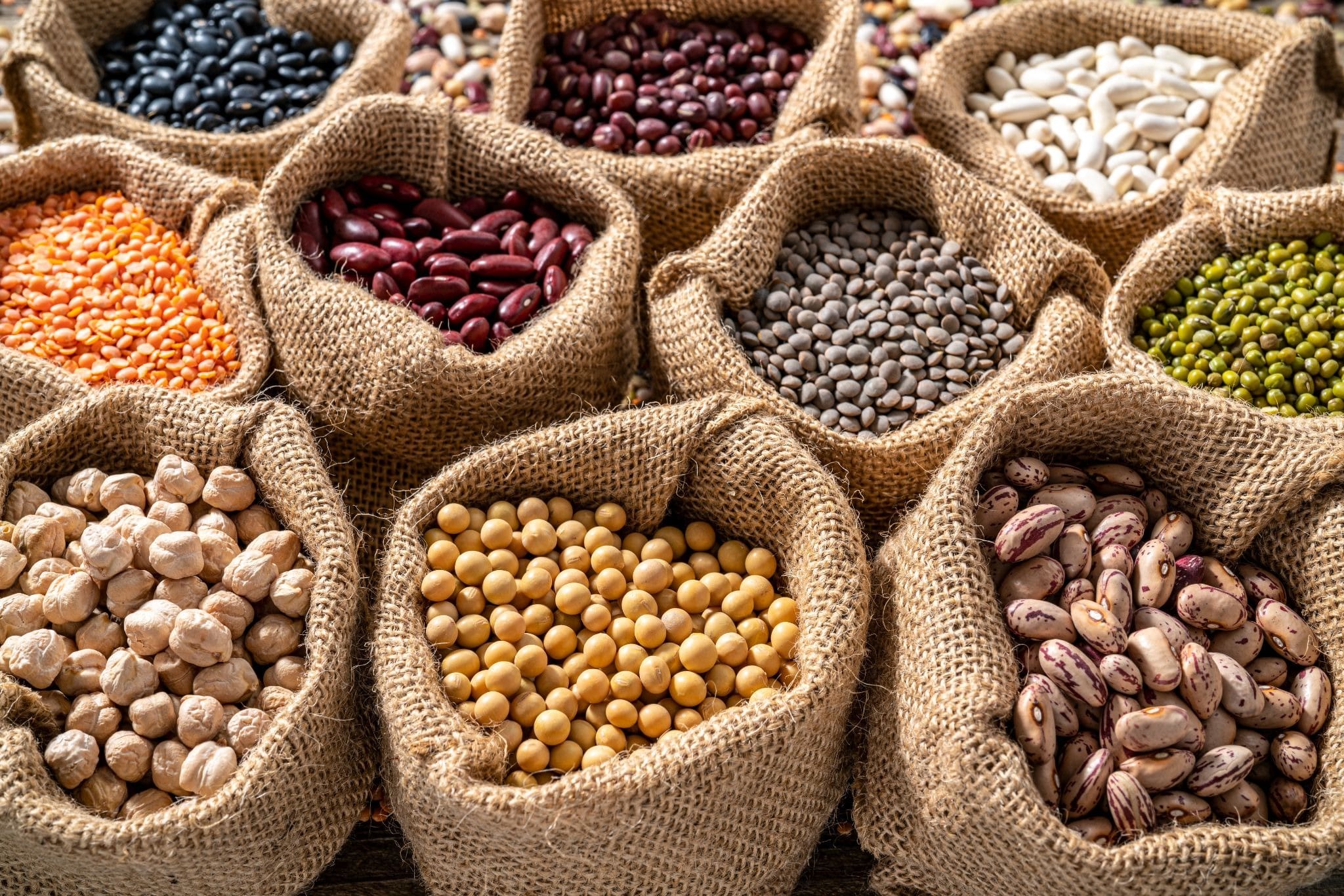
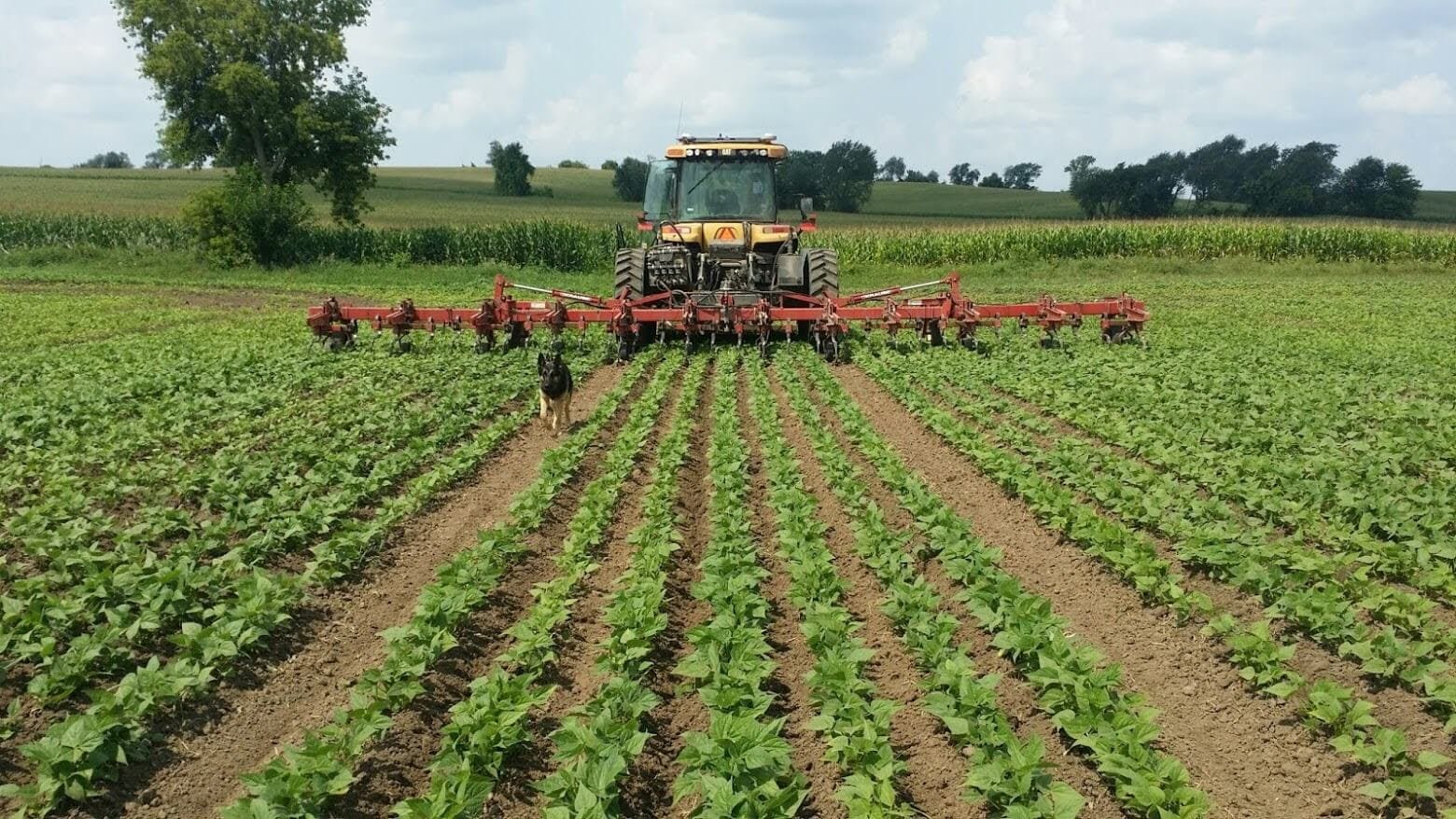
In 2026, a quiet revolution is happening in kitchens and on farmland across the Upper Midwest. Organic ancient grains like einkorn, emmer, spelt, millet, and quinoa are no longer specialty curiosities tucked into the corner of a health food store. They are showing up in everyday sandwich bread, weeknight pasta, and Sunday morning pancakes, because more people than ever want food that is nutrient-dense, minimally processed, and honestly grown.
Doudlah Farms is at the center of this shift. Here is why that matters, and how it can change the way you cook and eat.
Key Takeaways
- Organic ancient grains like einkorn, emmer, spelt, millet, and quinoa are resurging in 2026 because people want more nutrient-dense, less-processed food. Ancient grains are seeds and cereal crops that have remained largely unchanged for thousands of years, and many are high in fiber, protein, and essential nutrients that modern refined flour simply cannot match.
- Doudlah Farms grows and freshly mills certified organic ancient grains and grain flour on a regenerative family farm in Wisconsin. This article explains why those choices matter for your health, your kitchen, and the soil beneath your feet.
- Ancient wheat and other heritage grains often offer richer flavor, better digestibility for many people, and stronger support for soil health compared to modern wheat. Freshly milled organic ancient grains retain more vitamins, minerals, and aroma than shelf-stable refined flours, making a noticeable difference in everyday cooking and baking.
- A short FAQ at the end answers common practical questions, including storage, gluten concerns, and how to substitute ancient grain flour in your favorite recipes.
What Are Organic Ancient Grains, Exactly?
When people say “ancient grains,” they mean cereals and pseudo-grains that have remained genetically similar to how they were grown thousands of years ago. Unlike modern wheat, which has been heavily hybridized and selected for industrial yield since the mid-20th century, ancient grains have not been genetically modified. Their breeding practices have preserved a higher genetic diversity, which is one reason they taste, perform, and nourish differently than the commodity flour lining supermarket shelves.
At Doudlah Farms, “organic ancient grains” means certified organic, non-GMO seeds and cereals grown without synthetic pesticides or chemical fertilizers. The farm uses regenerative practices in the Upper Midwest, including cover cropping, diverse crop rotations, and careful soil stewardship, to produce grain that is as good for the land as it is for the people eating it.
Ancient Grains vs Heritage Grains
The terms get used interchangeably, but there is a useful distinction. Ancient grains generally include very old species, sometimes called the founders of agriculture, like einkorn and emmer. Heritage grains usually refer to pre-Green Revolution varieties from the 19th and early 20th centuries that have fallen out of commercial production. Both categories share a common trait: they have been largely left alone by modern industrial breeding programs.
Common Examples in 2026
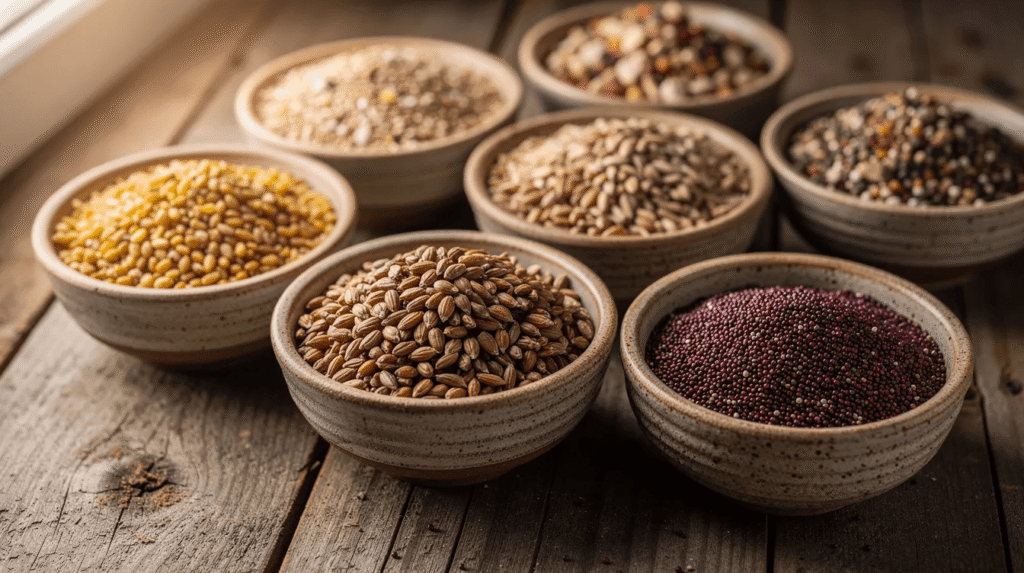
Examples of ancient grains include quinoa, spelt, and farro (emmer), along with a wide range of other grains now widely available:
- Einkorn – the oldest known cultivated wheat, domesticated 10–12 millennia ago in the Fertile Crescent
- Emmer (farro) – a hardy grain that can be grown in poor soils and hilly areas where modern wheat struggles
- Spelt – cultivated since approximately 7,000 BC, popular across Central Europe for centuries
- Khorasan wheat, commonly called Kamut, is known as King Tut’s wheat, with a distinctly buttery flavor
- Millet – originated over 4,000 years ago in Africa, one of the earliest domesticated cereals on the continent
- Teff – a tiny, iron-rich grain used to make traditional Ethiopian injera bread
- Sorghum, amaranth, buckwheat, quinoa – pseudo-grains or non-wheat grains that round out the family
Doudlah Farms focuses on growing and milling ancient wheat varieties, particularly spelt, emmer, and einkorn, offering them as whole kernels and freshly milled grain flour. Some ancient grains are naturally gluten-free, aiding those with gluten sensitivities, though the wheat-based varieties the farm specializes in do contain gluten.
It is worth noting that quinoa, amaranth, and buckwheat are technically pseudo-grains, meaning they are not grasses. But they behave like grains in the kitchen and are usually naturally gluten-free, which makes them popular among people managing dietary restrictions.
Ancient Wheat vs Modern Wheat: Taste, Nutrition, and Digestibility
Modern high-yield wheat varieties were bred heavily during the mid-20th-century Green Revolution. Those breeding programs prioritized yield, uniformity, and compatibility with synthetic fertilizers and industrial milling. The result is a grain that produces a lot of bushels per acre but has traded away many of the traits that made wheat a foundational food for millennia. Modern wheat has higher gluten content and lower fiber content compared to its ancestors.
Ancient wheat, specifically einkorn, emmer, spelt, and Khorasan, keeps older genetic traits that people are now rediscovering for flavor, comfort, and nutrition. Doudlah Farms intentionally chooses these older varieties because they perform well in organic systems and deliver eating quality that commodity flour cannot replicate.
Digestibility
Heritage grains are easier to digest than modern wheat for many people. Customers commonly report that long-fermented sourdough made from ancient wheat or heritage grains feels gentler on their digestion than conventional white bread. Research suggests this may be related to the weaker gluten networks and different gliadin peptide profiles found in diploid wheats like einkorn. These grains still contain gluten and are not safe for celiac disease, but the experience many people describe is real and increasingly supported by emerging science.
Nutrition
Ancient grains are more nutrient-dense than modified grains, and the differences become especially clear when the bran and germ are left intact through whole grain milling. Key nutritional advantages include:
- Protein: Einkorn has up to 20% higher protein content than modern wheat. A 2025 study on flour digestibility found einkorn protein at roughly 21.3%, with lower rapidly digestible starch compared to modern refined wheat.
- Minerals: Spelt is higher in selenium, phosphorus, and magnesium than modern wheat, making it a strong choice for everyday baking.
- Antioxidants and bioactives: Many ancient grains provide beneficial plant compounds such as polyphenols and flavonoids. Einkorn in particular is notably rich in carotenoids like lutein, which gives its flour a golden hue.
- Fiber and micronutrients: Ancient grains are minimally refined compared to conventional grains, preserving nutrients that industrial roller milling strips away.
Product labeling for ancient grains should include certifications for organic and whole grain, so look for those markers when shopping for flour or whole kernels.
Flavor
Flavor is where ancient wheat truly separates itself, and it shows up in everyday food:
- Spelt is slightly sweet and nutty, excellent in sandwich breads and cookies
- Emmer is earthy and robust, with a chewy texture that works beautifully in pasta and grain bowls
- Khorasan (Kamut) is buttery and rich, ideal for pizza crust or flatbreads
- Einkorn has a golden, mildly sweet character, wonderful in pancakes and quick breads
These flavors come through most strongly when the flour is freshly milled and used whole, with germ and bran intact.
Versatility for Home Bakers
Many heritage grain flours and some ancient wheat flours can be substituted one-for-one for all-purpose wheat flour in recipes like muffins, cookies, and quick breads. Other grains, like einkorn or high-spelt doughs, may need slightly more hydration and gentler handling. Doudlah Farms’ stone-milled grain flour is designed for real home kitchens, with easy-to-follow tips on the packaging and on the farm’s website for using heritage grains in sourdough, muffins, cookies, and pizza dough.
Why Fresh-Milled Organic Ancient Grains Matter for Health and Soil
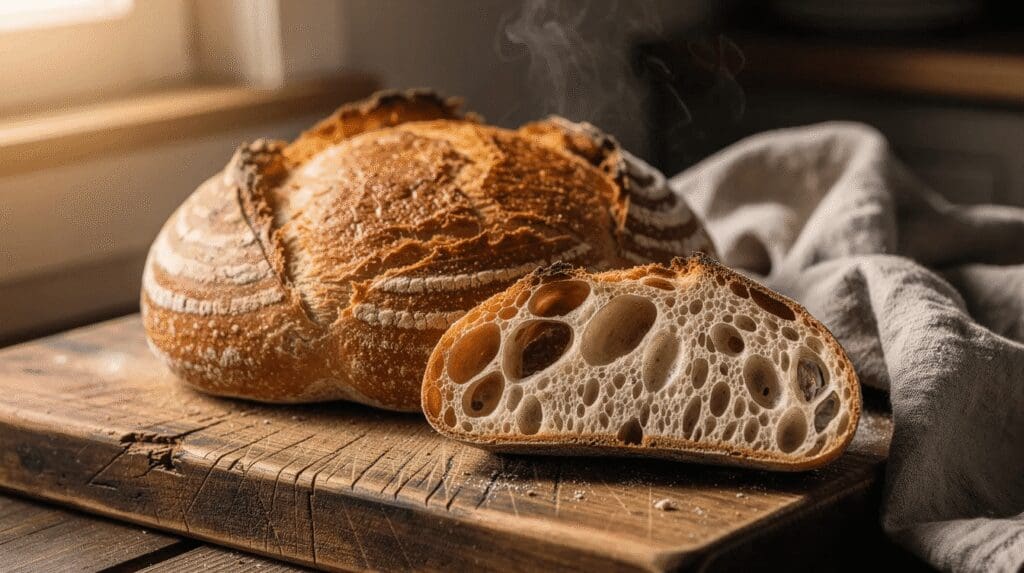
Three things need to come together for you to get the full benefit of these grains: the grain itself must be a nutrient-rich ancient or heritage variety, it must be grown organically without synthetic inputs, and it must be milled fresh rather than sitting on a warehouse shelf for months. When all three align, the nutritional, environmental, and culinary results are noticeably different from anything you can purchase in a standard supermarket aisle.
How Fresh Milling Works at Doudlah Farms
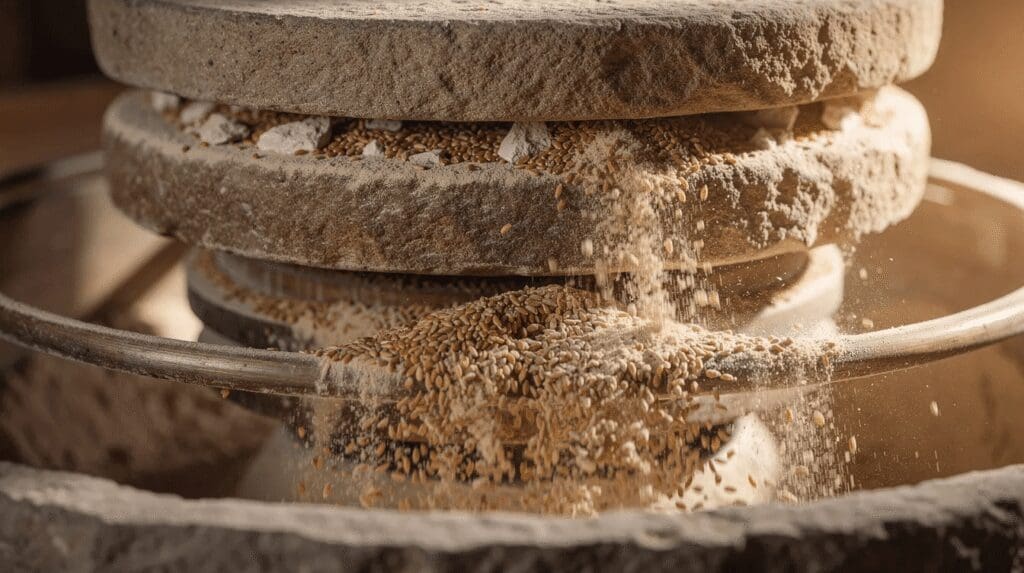
Whole kernels are stored properly on the farm under cool, low-moisture conditions, where the intact hull protects the germ oils and nutrients inside. When an order is placed, kernels are stone-milled in small batches just before packing and shipping. This matters because once grain is ground, oxidation begins immediately. Lipids in the germ start to go rancid, volatile aroma compounds fade, and fat-soluble vitamins like Vitamin E degrade. Research on flour storage confirms that milled whole grain flour loses quality measurably within weeks at room temperature. Fresh milling sidesteps this problem entirely.
Organic ancient grains retain their full nutrient profiles due to minimal processing, and freshly milled flour from Doudlah Farms captures nutrients at their peak.
Health Benefits
The evidence supporting whole grain consumption is strong and widely accepted. Regular intake of whole grains is associated with reduced risk of heart disease, type 2 diabetes, obesity, and some cancers. Ancient grains amplify these benefits because they bring extra density of fiber, micronutrients, and bioactive compounds to the equation.
Specific highlights across the ancient grain range include:
- Antioxidant protection: Ancient grains offer antioxidant properties that help combat oxidative stress, including carotenoids in einkorn and bound phenolic acids in emmer and spelt.
- Complete proteins: Quinoa and amaranth are complete protein sources containing all essential amino acids, making them important for plant-forward diets.
- Mineral density: Teff is particularly noted for its high iron and calcium content. Amaranth contains higher levels of iron, phosphorus, and magnesium than most other grains.
- Cardiovascular support: Regular intake of ancient grains may support cardiovascular health through fiber, magnesium, and anti-inflammatory plant compounds.
Fiber and Resistant Starch
The intact bran and germ in ancient grain flour feed the gut microbiome in ways that refined white flour simply cannot. Whole grain flour provides insoluble and soluble fiber, arabinoxylans, and resistant starch that support healthy bacterial populations in the colon, help maintain stable blood sugar, and promote satiety. Modern refined wheat loses these components almost entirely during industrial processing.
Soil and Environmental Health
Doudlah Farms’ organic and regenerative practices include cover cropping, diverse rotations with legumes and forages, and minimal or no synthetic inputs. Ancient grains like spelt and emmer often tolerate lower-input systems and variable Midwestern weather better than some modern wheats. Research on nitrogen use efficiency has shown that ancient wheats can achieve greater nitrogen uptake under low-input conditions, meaning they yield reasonably well without chemical crutches.
Deeper-rooted heritage grain varieties help build soil structure and organic matter, support pollinators and biodiversity, and reduce erosion. Wisconsin’s OGRAIN network actively supports organic ancient grain production in the region, connecting farmers like Doudlah with research, field days, and a growing specialty grain market.
By choosing organic ancient grains and grain flour from a local Wisconsin farm in 2026, you are directly supporting cleaner water, healthier soil, and reduced synthetic chemical use in your region. That is a sign of food purchased with purpose.
How to Cook and Bake with Ancient and Heritage Grains from Doudlah Farms
Do not be intimidated. Ancient grains can fit easily into weeknight cooking and family baking routines with just a few adjustments. If you can boil rice or make a basic muffin recipe, you already have the skills you need.
Cooking Whole Kernels
Grain berries like spelt berries, emmer, and einkorn kernels are cooked similarly to rice or other grains, just with a bit more time:
- Rinse the kernels under cold water
- Combine with water at roughly a 2.5:1 to 3:1 water-to-grain ratio
- Bring to a boil, then reduce to a simmer, cover, and cook for 45–60 minutes until tender-chewy
- Drain any excess water and fluff
Cooked whole kernels work beautifully in grain bowls, hearty salads with seasonal vegetables, soups, and breakfast porridges. They hold up well in the refrigerator for several days, making them a practical meal-prep staple for busy families.
Baking with Ancient Grain Flour
For beginners, the easiest entry point is replacing 25–50% of your usual all-purpose wheat flour with ancient grain flour in your favorite recipes. Muffins, cookies, quick breads, and pancakes are all forgiving and will reward you with noticeably richer flavor without requiring any major technique changes.
As you gain confidence, move toward 100% ancient grain flour. Here is how dough behavior changes with certain types:
- Spelt dough is often softer and more extensible. It benefits from gentler kneading and slightly shorter proof times.
- Einkorn dough can be stickier. It prefers lower hydration and careful shaping. Avoid overworking it.
- Emmer flour produces a denser, more rustic crumb, making it ideal for flatbreads and pasta.
Recipe Ideas Using Doudlah Farms Products
- 100% spelt sandwich bread for school lunches – soft crumb, nutty flavor, holds together well
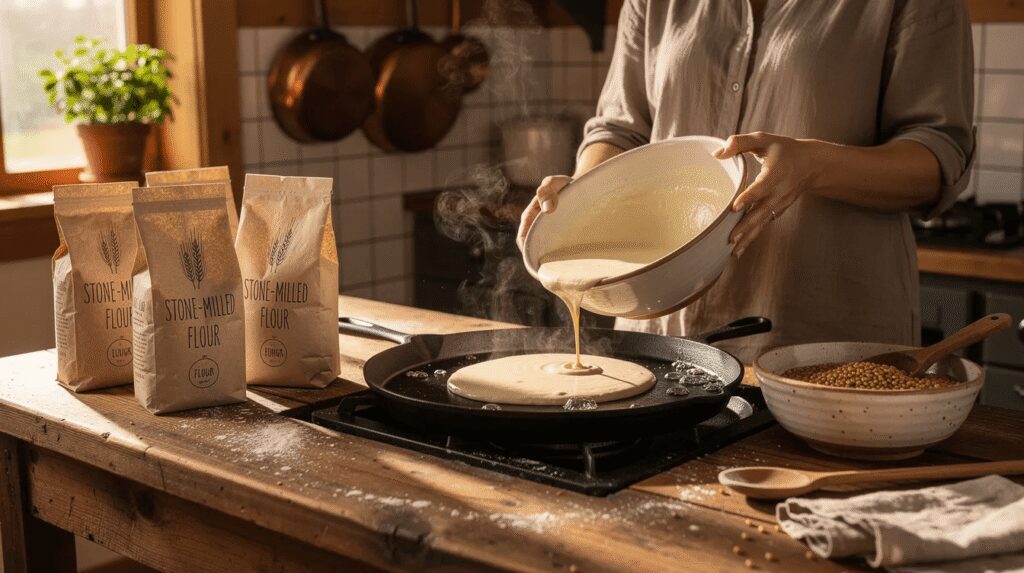
- Emmer flour pancakes for Sunday brunch – hearty, earthy, and deeply satisfying
- Heritage grain pizza crust for Friday night – use Kamut or spelt flour for a golden, flavorful base
- Grain salads with cooked spelt or emmer berries, roasted seasonal vegetables, herbs, and a simple vinaigrette
- Homemade pasta with emmer flour – the chewy texture is compared favorably to traditional Italian semolina pasta by many home cooks
A Note on Gluten-Free Options
Doudlah Farms’ main focus is on organic ancient wheat and heritage grains, which all contain gluten. If you must avoid gluten entirely, naturally gluten-free ancient grains and pseudo-grains like millet, sorghum, quinoa, buckwheat, and amaranth are widely available. Always check labels and cross-contact information carefully before purchasing any flour or grain products.
Explore Doudlah Farms’ online store and farm updates, where you can find freshly milled grain flour, whole kernels, cooking tips, and seasonal recipe ideas that showcase their organic ancient grains throughout the year.
FAQ: Organic Ancient Grains at Doudlah Farms
Are ancient grains gluten-free?
Most ancient wheats, including einkorn, emmer, spelt, and Khorasan, do contain gluten and are not safe for people with celiac disease. However, some individuals with general wheat sensitivities report feeling better with long-fermented bread made from heritage grains, likely due to differences in gluten structure and processing.
Some non-wheat ancient grains and pseudo-grains like quinoa, amaranth, buckwheat, millet, and sorghum are naturally gluten-free in their pure form. Customers must always check Doudlah Farms’ packaging and mill information for any risk of cross-contact with gluten-containing grains.
How should I store fresh-milled ancient grain flour from Doudlah Farms?
Because fresh-milled whole grain flour still contains the natural oils from the germ, it should be stored in an airtight container in a cool, dark place for short-term use, or in the refrigerator or freezer for longer-term freshness.
Concrete time frames to keep in mind:
- Room temperature: use within a few weeks
- Refrigerator: maintains quality for about 2–3 months
- Freezer: stays fresh for roughly 4–6 months
Whole kernels, by contrast, last substantially longer, often a year or more, because the intact hull protects the germ oils inside.
Can I substitute ancient grain flour 1:1 for all-purpose flour in recipes?
In many home recipes, especially cookies, quick breads, and muffins, Doudlah Farms’ heritage wheat flour and some spelt flours can often be swapped one-for-one for all-purpose flour with good results. The flavor will be noticeably richer.
For yeast breads and pizza dough, beginners should start by replacing 25–50% of the white flour with ancient grain flour, then adjust hydration, kneading intensity, and proof times as they learn how each grain behaves. Einkorn in particular requires lower hydration and very gentle handling.
Why choose organic ancient grains from a local farm instead of standard supermarket flour?
Buying directly from Doudlah Farms in Wisconsin gives customers fresher, traceable grain flour grown organically on real fields they can actually visit or see online, rather than anonymous commodity flour blended from multiple sources and purchased months after milling. Ancient grains are more nutrient-dense than modified grains found on most supermarket shelves, and fresh milling preserves what industrial processing destroys.
This choice supports living soils, cleaner local waterways, and family-scale agriculture, while giving households better-tasting breads, pancakes, and everyday meals made from grain that was still in the field only months ago.
Do I need special equipment to grind or use your ancient grains?
Most customers do not need their own grain mill because Doudlah Farms already stone-mills ancient and heritage grains into ready-to-use flour. Whole berries are also available for those who enjoy home milling or cooking intact grains.
Standard kitchen tools are enough to get started:
- A stovetop pot with a lid for cooking whole kernels
- A mixing bowl and wooden spoon (or stand mixer)
- A home oven for baking
- A simple kitchen scale for weighing flour, which improves consistency
No specialized equipment is considered necessary, and the range of products Doudlah Farms offers means you can start as simply or as ambitiously as you like.
Additional FAQ
How do ancient grains compare to rye or rice for everyday cooking?
Rye is a popular grain in Northern European baking traditions, and rice is a global staple, but neither offers the same combination of protein, mineral density, and complex flavor that ancient wheats like spelt and emmer bring. Spelt, for example, can replace wheat flour in most bread recipes while delivering more magnesium, selenium, and phosphorus per serving. Rice works well alongside ancient grains rather than as a substitute – try a grain bowl mixing cooked emmer berries with steamed rice for contrasting textures.
Are Doudlah Farms’ ancient grains traced back to specific fields?
Yes. Because Doudlah Farms is a single-origin family farm, every bag of flour or whole kernels can be traced back to the specific fields where the grain was grown and harvested. This level of traceability is rarely found in commodity flour products and is an important reason customers choose a direct relationship with a farm they trust.
What is the best ancient grain for someone who has never tried one before?
Spelt is the most commonly recommended starting point. It behaves similarly to conventional wheat flour in baking, produces a softer crumb than emmer or einkorn, and has a mild, nutty sweetness that appeals to a wide range of palates. From there, many people branch out to emmer for heartier dishes and einkorn for its golden color and exceptionally high protein content. Einkorn is 20% higher in protein than modern wheat, making it a popular choice for nutrition-focused bakers once they are comfortable with its slightly different dough behavior.