
Scratch cooking is only as good as what goes into the pot. You can nail the technique, follow the recipe to the letter, and still end up with a flat, forgettable meal if the beans are stale, the grains are commodity-bred for shelf life, and the flour sat in a warehouse for a year. At Doudlah Farms Organics, we see, taste, and measure the difference every harvest – and we think you will too.
Key Takeaways
- Scratch cooking delivers its best results when you start with organic, regeneratively grown staples like dried beans, heritage grains, and ingredients for homemade bread – not when you simply swap one processed shortcut for another.
- Choosing higher-quality ingredients means better flavor, improved nutritional value, and meals that leave you genuinely satisfied rather than just full.
- Skipping most convenience food frees up your grocery budget to buy fewer, better ingredients while keeping weeknight dinners realistic for busy families.
- Our “Tested Clean” standards screen for 220+ chemicals, including glyphosate, so scratch cooking becomes about peace of mind as much as taste.
- Try one simple change – like swapping canned beans for our dried Organic Pinto Beans – and explore our recipes page for scratch-cooking ideas that put better ingredients to work immediately.
What We Mean by “Scratch Cooking” Today
Modern scratch cooking means building meals from single-ingredient, minimally processed whole foods – dried beans, heritage grains, fresh vegetables, eggs, good olive oil – rather than relying on boxed mixes and heavily processed foods. It does not mean churning your own butter or growing every herb in your backyard. It means knowing what’s in your food and choosing ingredients with short, recognizable labels.
Consider the difference: a pot of beans simmered with olive oil, onions, garlic, and spices versus a canned condensed soup loaded with sodium and stabilizers. A loaf of homemade bread made with just flour, water, and time versus shelf-stable white bread padded with conditioners, preservatives, and dough enhancers. Homemade salad dressings that avoid the additives found in store-bought versions versus squeeze bottles with ingredient lists you need a chemistry degree to parse.
The real power of scratch cooking lies not only in the recipes themselves, but in the quality, origin, and farming practices behind each ingredient. That’s where the argument begins.
Reason 1: Better Ingredients → Better Flavor, Every Single Day
Let’s be honest – flavor, not virtue or perfectionism, is the number one reason scratch cooking should start with better ingredients. When the raw material tastes good on its own, everything you make with it tastes better without extra effort.
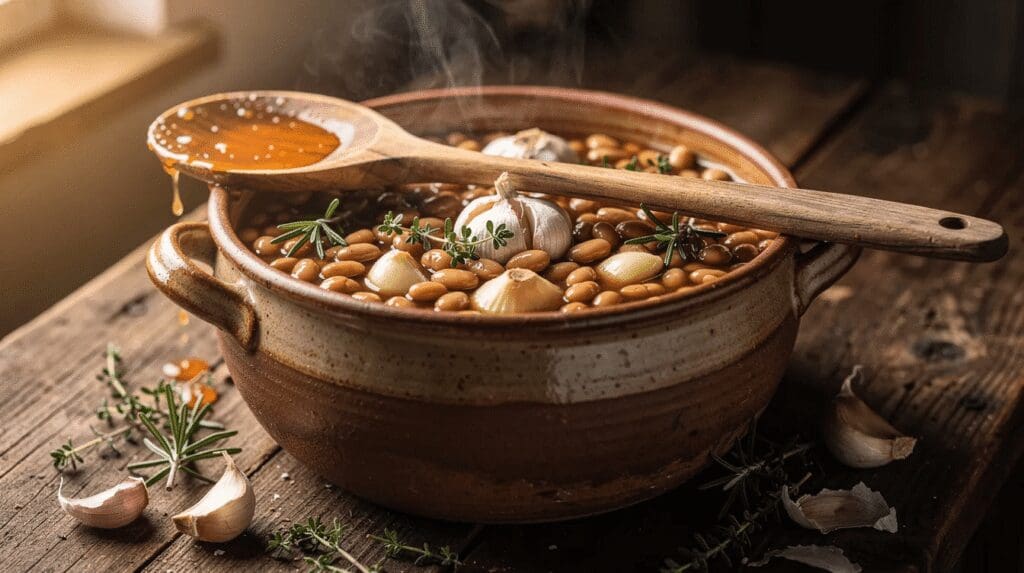
Organic, regeneratively grown beans and grains tend to have deeper, cleaner flavor profiles and more reliable texture compared with commodity versions bred purely for yield. Freshly prepared ingredients yield superior aromas and taste that no amount of seasoning can replicate in a low-quality base. A pot of pinto beans from our Wisconsin fields simmers into something creamy and robust in chili or refried beans – a world apart from a generic canned alternative that relies on sodium to fill in flavor gaps.
Scratch cooking also lets you taste the character of real olive oil, garlic, onions, and fresh herbs instead of the flattened, uniform taste of many processed foods. Cooking from scratch allows for creativity in flavor combinations because you’re working with ingredients that actually have complexity. Homemade hummus allows for flavor customization and healthier ingredients – tahini, lemon, garlic, cumin – each one pulling its weight.
Here’s what cooks often discover: when the underlying ingredients already carry sweetness and depth from healthy soil, you need fewer add-ons. Less extra cheese, less sugar, fewer heavy sauces. Preparing meals from scratch fosters culinary creativity and intuition because you learn what each ingredient contributes rather than masking everything under a blanket of store-bought condiments.
Reason 2: Ingredient Quality Shapes Nutrition and How You Feel
Scratch cooking with whole foods naturally makes space for more fiber, plant protein, and micronutrients compared with pre-packaged convenience foods. Cooking from scratch improves nutrition and reduces sodium intake almost automatically – you control the salt shaker, not a factory.
Soil health and biodiversity on organic, regenerative farms influence nutrient density in crops. Paired farm trials across the U.S. have found that regenerative farms – using no-till methods, cover crops, and diverse rotations – produced crops with meaningfully higher levels of certain vitamins, phenolics, and phytochemicals compared with conventional counterparts. While no single meal transforms your health, the cumulative effect of eating nutrient-rich food week after week matters.
Connect this to everyday experience: a lunch built around homemade bean soup, a slice of homemade bread, and a drizzle of good olive oil leaves you full and steady longer than an instant noodle cup or boxed mix. More fiber, more plant protein, slower energy release – fewer crashes mid-afternoon.
Our beans and grains are certified organic and non-GMO, grown without synthetic pesticides or herbicides. We also test for 220+ chemicals as part of our “Tested Clean” standards, because cooking from scratch avoids additives found in processed foods only if the raw ingredients are genuinely clean. Think of scratch cooking not as a restriction, but as a way to feel better after meals – more energy, fewer crashes, and a clearer sense of how food affects your body.
Reason 3: Sourcing and Farming Practices Matter More Than Ever
Where and how food is grown is now part of every ingredient choice, especially for those who want domestic, transparent supply chains. A bag of beans or a sack of flour carries a story – the soil it came from, the farmer who grew it, the practices that shaped it.
At Doudlah Farms Organics, we farm in Southern Wisconsin using organic and regenerative methods that focus on soil health, biodiversity, and long-term ecosystem resilience. In simple terms, that means diverse crop rotations, cover crops, and avoiding synthetic chemicals to build living soil that supports healthier plants. We’re also in conversion toward biodynamic certification, pushing our practices further.
This connects to domestic food security. When more staples like beans and heritage grains are grown in the U.S. on family farms, home cooks are less dependent on fragile global commodity chains. You know where your food comes from, you can trace it, and you’re supporting rural communities and cleaner water at the same time.
Choosing ingredients from farms committed to these practices turns everyday scratch cooking into a quiet vote for healthier soil and stronger local economies. That’s a game changer for families who want their grocery dollars to do more than fill a cart.
Why Convenience Foods Don’t Always “Save” You Time
Everyone reaches for convenience food sometimes – no judgment. But many of those shortcuts actually don’t save as much time as we assume.
Compare these two scenarios: stirring together a quick bean soup from olive oil, onions, stock, and cooked beans takes roughly the same hands-on time as opening a canned condensed soup, adding milk, heating it up, and doctoring it with spices to make it taste like something you’d want to eat. Using a slow cooker can simplify meal preparation dramatically – slow cookers transform tough cuts of meat into tender dishes and excel at making hearty soups and chilis, all while you’re doing something else. Using a slow cooker allows flavors to meld together beautifully over several hours of hands-off simmering. Instant Pots can cook meals in a fraction of the time when you’re short on time.
A big pot of scratch-cooked beans, grain salads, or homemade bread baked on Sunday can support multiple meals through the week just as effectively as frozen dinners or boxed sides. Making stock from vegetable scraps reduces food waste and costs nothing – toss carrot peels, onion ends, and celery leaves into a bag in the freezer, then simmer them into rich stock when the bag is full.
Hidden time costs of convenience foods add up: extra trips to the store, time spent reading labels to avoid unwanted ingredients, and the fatigue of uninspiring, repetitive flavors. Fresh ingredients can be practical for meals before they spoil if you plan around what needs to be used first.
Think in terms of “batch time” and “hands-off time” rather than “instant.” Scratch cooking is a series of simple, repeatable habits – not a marathon in the kitchen.
How Scratch Cooking Starts With Your Pantry, Not Your Recipes
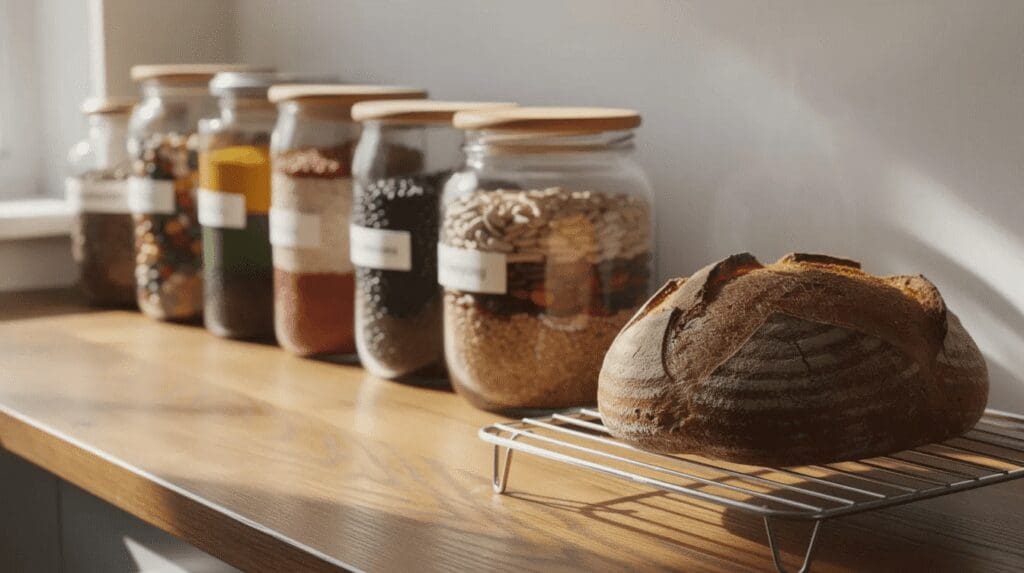
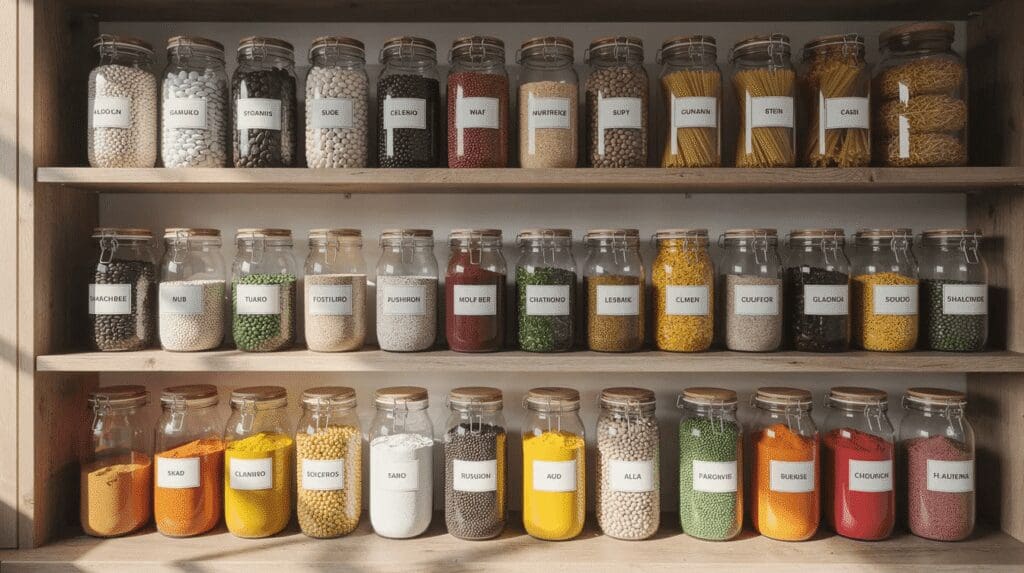
Most weeknight stress comes from poor pantry support, not lack of recipe inspiration. If your shelves hold a jar of dried beans, a bag of rice, a bottle of vinegar, and a tin of spices, you already have the foundation for several dishes.
A scratch-friendly pantry looks like this:
- Jars of dried beans (pinto, black, navy, cranberry)
- Heritage grains and flour for baking
- Olive oil, vinegar, salt, and seasonings
- Nut butter, honey, and a few condiments you trust
- Basic vegetables (onions, garlic, carrots) and whatever’s fresh
Meal planning helps streamline the use of kitchen appliances and reduces food waste significantly. Planning meals helps streamline cooking processes so you’re not standing in front of the fridge at 6 PM wondering what to make for dinner.
When the building blocks are high-quality – clean, flavorful, and versatile – you can combine them quickly into soups, grain bowls, salads, stir fry, pasta, and stews without elaborate planning. Homemade salad dressings avoid additives found in store-bought versions and take about two minutes with olive oil, vinegar, mustard, and a pinch of salt. Homemade hummus uses affordable, shelf-stable ingredients you probably already have.
Picture this: pulling cooked pinto beans, frozen homemade stock, and a loaf of homemade bread from the freezer turns into dinner in under half an hour with almost no stress. Essential kitchen tools include a sharp chef’s knife and a sturdy cutting board – you don’t need a professional kitchen to make a complete home-cooked meal.
We design our product lineup – beans, grains, cornmeal, popcorn – to function as this kind of dependable scratch-cooking backbone for busy households and professional kitchens alike.
From Our Fields to Your Pot: A Pinto Bean Case Study
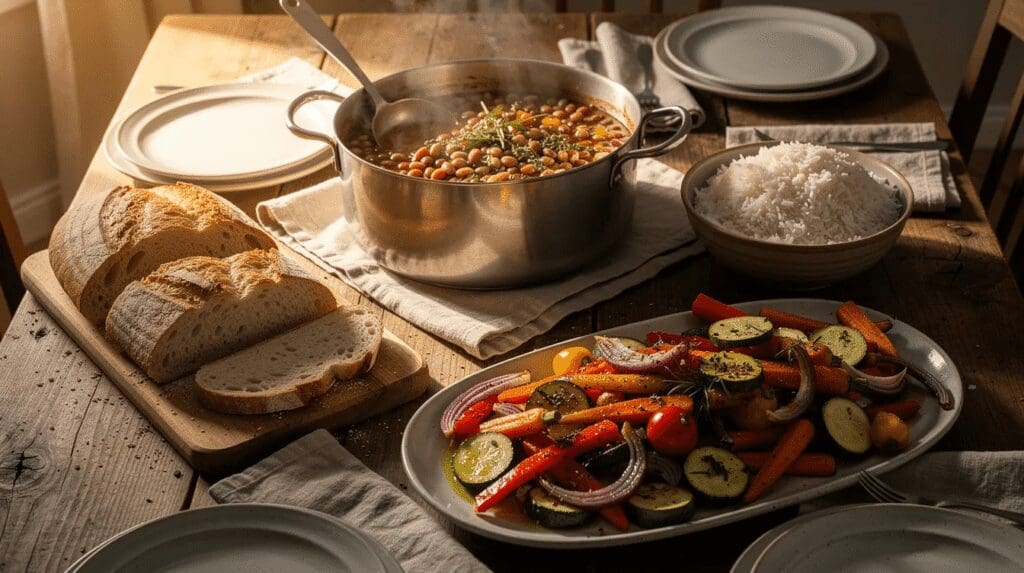
Think about a classic scratch-cooked meal: a pot of pinto beans simmered with onions, garlic, and a drizzle of olive oil, served alongside rice, a few roasted vegetables, and a slice of homemade bread. Simple. Delicious. The kind of dinner that feeds the whole family and still leaves enough for lunch tomorrow.
Our Organic Pinto Beans are grown on our sixth-generation family farm in Wisconsin, certified organic and non-GMO, and raised with regenerative practices that support long-term soil health. We certify every batch for over 220 pesticides and glyphosates through TestedClean.org, because this matters for families concerned about chemical residues in everyday staples their kids eat multiple times a week.
The difference in the finished dish is tangible: creamier texture, more even cooking, and a nutty, full flavor that needs less salt and fewer add-ins to taste complete. One pound of dried beans yields roughly 2.5 to 3 pounds cooked – enough for several meals across the week at about $0.11 per serving. Compare that to canned beans at two to four times the price, often packed with sodium, preservatives, and BPA-lined cans.
If you’re ready to swap canned for dried in your scratch cooking, start here.
Why We Obsess Over Being “Tested Clean”
“Tested Clean” means third-party testing for 220+ chemicals, including glyphosate and its primary metabolite AMPA. It’s a layer of assurance that goes beyond the legal minimums of organic certification.
Why does this matter specifically for scratch cooks? Because you eat your own homemade bread, beans, and grains several times a week. These aren’t occasional indulgences – they’re the foundation of your diet. Tiny daily exposures to residues can accumulate over time, especially for kids, pregnant individuals, and anyone with existing health sensitivities or food allergies.
Many convenience foods – and even some organic products – can legally contain trace residues up to regulatory limits. We choose to go beyond those minimums for our beans and grains because when you simmer a pot of beans or bake a loaf of bread from our ingredients, you shouldn’t have to wonder what might be hidden in the flour or legumes.
Think of ingredient sourcing as an extension of the same care you put into chopping onions, kneading dough, and seasoning your homemade meals. The attention starts before the cooking does.
Stretching Your Budget by Cooking From Scratch (Without Living in the Kitchen)
Cost is one of the main reasons people look into scratch cooking, and the math holds up. Buying whole raw ingredients is cheaper per serving than pre-packaged foods in almost every category. Homemade meals can save money compared to store-bought options, and cooking from scratch saves money on groceries over time.
Dried beans and bulk heritage grains offer dramatically lower per-serving costs than many processed alternatives:
| Ingredient | Approx. Cost Per Serving |
|---|---|
| Dried pinto beans (Doudlah Farms) | ~$0.11 |
| Store-brand canned beans | ~$0.34 |
| National-brand canned beans | ~$0.48 |
| Homemade bread (per slice) | Less than store-bought |
| Takeout meal | 10–18+ |
One pound of dried pinto beans expands to multiple pounds cooked, feeding several meals across the week. Making your own bread is cheaper than buying store-bought, especially when you bake in bulk and freeze loaves for later. Homemade vegetable stock reduces food waste and costs nothing – it’s literally made from scraps you’d otherwise throw away.
The principle is “invest once, eat many times.” Spend an hour on the weekend cooking beans, baking homemade bread, and prepping a grain salad. That hour supplies fast, home-cooked meals for busy days ahead. Cooking larger batches can reduce reliance on takeout and impulse purchases that quietly drain your budget.
Spending a bit more per pound for clean, domestic, organic staples often still lands well below the price of takeout or processed, branded convenience foods. Saving money and eating well aren’t opposites – they’re the same strategy.
Why Our Farm Focuses on Beans, Grains, and Other Scratch Staples
We intentionally grow the kinds of food people actually build meals around – beans, heritage grains, cornmeal, popcorn – instead of niche luxury products. These are the staples that show up in chili, soups, salads, homemade bread, polenta, cornbread, grain bowls, and dozens of other dishes.
Because we sell directly to households and artisans, we hear real feedback about how our beans and grains perform in sourdough loaves, stews, breads, and restaurant kitchens. That feedback shapes what we grow and how we grow it.
Our mission connects back to something bigger: supporting domestic food security, soil health, and cleaner diets by making regenerative staples easy to purchase, store, and cook from scratch. Readers can browse our recipe collection for practical ways to put these staples to use – from simple weeknight soups to dessert ideas featuring cornmeal and popcorn.
Putting the “Why” Into Practice: Simple Next Steps for Home Cooks
This is not about perfection. It’s about making one or two smarter ingredient choices that you repeat often enough to become second nature. Cooking from scratch builds skills and confidence in the kitchen, one meal at a time.
Here are three concrete first swaps:
- Canned beans → dried beans. Start with a batch on Sunday, portion into containers, and use them through the week in soups, salads, burritos, and grain bowls.
- Store-bought white bread → a simple homemade bread recipe using organic flour. Even a no-knead loaf counts.
- Jarred pasta sauce → a quick scratch version. Pasta sauce can be made easily with fresh tomatoes and seasonings – olive oil, garlic, basil, salt, done.
Using the “add one thing” rule helps incorporate fresh ingredients into meals without overhauling your entire lifestyle. Toss a handful of fresh vegetables into that spaghetti. Stir a spoonful of nut butter into your morning oats. Make a sandwich with homemade bread instead of the packaged stuff.
Choose one meal in your week – like Sunday dinner or a weekly soup night – as your designated scratch cooking “anchor,” built from higher-quality ingredients. Chopping, stirring, and plating can provide mindfulness and stress relief, turning cooking from a chore into something you look forward to. One way to enjoy home cooking is to make it social and enjoyable – invite the kids to help, put on music, or cook with a friend.
For tactical “how” details on using different beans in certain dishes, check out our Bean Swap Guide. This article is about the “why” behind those choices – the rest is up to you and your kitchen.
Explore our recipe library to immediately put better ingredients to work.
Stay Connected: Join the Doudlah Farms Organics Community
Scratch cooking is easier – and more fun – when you have a steady stream of ideas, seasonal updates, and stories from the farm.
Our newsletter delivers new recipes featuring beans and homemade bread, farm updates from Southern Wisconsin, ingredient spotlights, and occasional specials. Every email focuses on practical value: real recipes, simple scratch-cooking inspiration, and transparent information about our farming and “Tested Clean” standards.
Sign up through our website to keep learning how to align your pantry with your values around soil health, clean food, and regenerative agriculture. We’ll meet you in your inbox with resources worth your time.
FAQ
Is scratch cooking always cheaper than buying convenience foods?
Over time, building meals around staples like dried beans, grains, and homemade bread ingredients usually lowers the cost per serving compared with takeout and many branded convenience foods. A beginner’s grocery list can simplify meal preparation and help you avoid impulse buys. There is an initial investment in pantry basics – a bag of flour, a few pounds of dried beans, olive oil, spices – but these stretch into multiple meals and reduce the grocery trips that lead to unplanned spending. Choosing higher-quality organic ingredients can still fit a budget when they replace processed snacks, single-serve meals, and frequent restaurant trips. Meal planning reduces food waste significantly, which means more of what you buy actually gets eaten.
How do I start cooking from scratch if I don’t have much time?
Start with one or two core habits. Cook a big batch of beans on the weekend. Bake a simple loaf of homemade bread once a week. Focus on dishes that reheat well – soups, stews, grain salads – so one cooking session supports several quick weeknight meals. Instant Pots can make homemade yogurt and bone broth with minimal supervision, and a slow cooker can handle a chili or stew while you handle the rest of your day. Even dedicating one hour a week to batch prep can break the cycle of reaching for takeout on exhausted evenings.
Why should I care if my beans and grains are organic and “Tested Clean”?
Organic standards prohibit synthetic pesticides and herbicides. “Tested Clean” adds an extra layer by screening for 220+ chemicals, including glyphosate and AMPA. Beans, grains, and homemade bread ingredients are foods many families eat multiple times per week, so cleaner options can reduce ongoing exposure to unwanted residues. For many of our customers, this testing – combined with domestic, regenerative farming – is a key reason they feel good about building their scratch meals around our products.
Can I still use some convenience foods and say I’m cooking from scratch?
Absolutely. Scratch cooking exists on a spectrum. It’s perfectly reasonable to combine high-quality store-bought items – like good olive oil, canned tomatoes, or a jar of mustard – with from-scratch elements. Prioritize where scratch cooking makes the biggest impact: staples like beans, grains, and homemade bread. Give yourself grace on busy nights. The heart of scratch cooking is ingredient awareness and intention, not perfection or rigid rules. A healthy meal doesn’t have to be 100% from scratch to be a massive upgrade over a frozen dinner.
Where can I find recipes that use Doudlah Farms Organics beans and grains?
Head to the recipes section on our website. You’ll find soups, chilis, salads, sides, and other dishes designed around our beans, grains, and cornmeal. Many recipes are built for batch cooking and freezing, making them ideal for busy households leaning into scratch cooking as a lifestyle. Start with a simple pinto bean or black bean recipe as an easy introduction to cooking with regeneratively grown staples – and go from there.